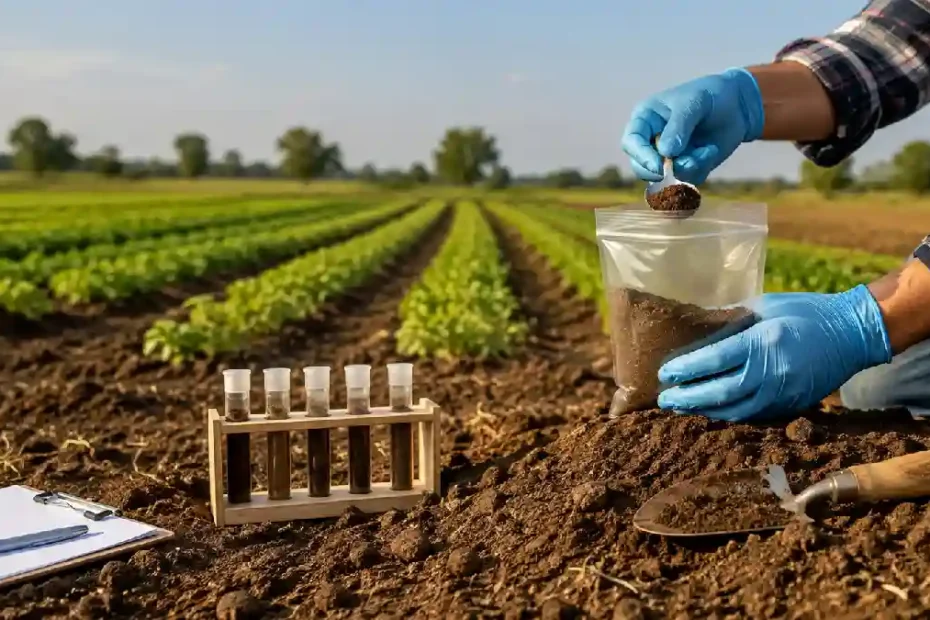
Be it commercial farming or home-based gardening, the soil is the ultimate source of nourishment for what you sow. And thus, testing it remains one of the most vital and fundamental tasks.
Soil testing involves an in-depth analysis of its existing nutrient profile, pH level, and overall composition, which collectively contribute to the health of your crops and plants. Well, it has other benefits, too.
Come and explore the importance of soil testing for agriculture in detail below. Also, get valuable insights into the best soil tests involved for sustainable agriculture and quality yields! Read on.
Top 5 reasons explained: Importance of soil testing in agriculture
As global food demand grows, farmers need efficient ways to manage soil nutrients and maintain productivity.
Without good soil, every effort goes in vain. Thus, you must first understand its health and arrange for proper soil testing.
Know its composition
For successful farming, analyzing the chemical properties and nutrient availability of soil, especially the micronutrient levels, is considered a top priority. E.g., iron, molybdenum, zinc, copper, etc.
Also, the macronutrients such as nitrogen and potassium fall on this list.
Assess the pH levels
How acidic or basic your soil has become can also be known from a soil test. It is one of the most important factors that determine healthy plant growth.
Why?
Soil pH directly affects the ability of plants to uptake nutrients. The more balanced it is, the better your crops will be nourished.
Track microbiome profile
Soil is home to several good microbes that collectively facilitate nutrient absorption for plants and crops. With a soil test, you can assess its diversity and get vital insights into its nutrient recycling mechanism.
Understand soil structure
Besides chemical content, the physical composition of the soil is equally significant in agriculture. Before planting a crop, always get to know its bulk density, texture ratios, and presence of organic matter by conducting a soil test.
One of the major importances of soil testing in agriculture is whether soil compaction and texture are restricting root growth, water movement, and gaseous exchange.
Learn about nutrient imbalances
You have already read that a soil test gives information about the mineral and organic content of the ground where crops are grown. This, in turn, acts as a potent indicator of whether the soil is deficient in or has an excess of a particular nutrient.
You can accordingly balance out the amount of fertilizer you might have been adding to the soil. This promotes healthy plant growth.
Let’s share a simple instance.
Suppose you find that your soil has a significant phosphorus deficit; using Phosphorus-rich fertilizers would help solve the problem.
5 environmental and agricultural advantages of soil testing
Prevent soil degradation
The concept of ‘Prevention is better than cure’ also applies to agriculture. It potentially minimizes soil damage.
Let’s see how.
Excessive fertilizer application is a common thing to happen, unknowingly in most cases. And the result is: long-term soil degradation, structural inconsistencies, and barrenness. But when you test the soil, you become aware of your land’s needs well before.
The earlier you identify the adversities going on, the greater the chances of soil health restoration are. And of course, this leads to better, sustainable agricultural practices and crop yields.
Conserve ecosystems (and those who depend on them)
Soil testing prevents over-application of chemical nutrients. When you give only the required amount of fertilizer, the problem of leaching is greatly resolved. This not only saves the land, but also water and other biologically connected vital resources.
Enhance cost-effective farming decisions
Soil testing is an extremely beneficial tool to make well-informed and agriculture-friendly land management practices. The type of soil determined through a soil test can help you select the right kind of crop, fertilization, and irrigation techniques, in turn leading to improved productivity and economic returns.
Lessen crop production budget
Soil testing proves equally advantageous to the farmers’ pockets!
By understanding the specific needs of your soil, you can cut down on unnecessary costs for chemical fertilizers and similar items.
Less wastage, more returns!
Improve crop health
Soil is the mother of agriculture. Whatever you produce is directly connected to the land wherein you sow.
Soil testing ensures that you put the right nutrients in the right proportion into your land, thus promoting good soil health. Naturally, the plants will grow healthier with less risk of diseases and vulnerability to environmental adversities.
Explore the major soil testing types for agriculture
There are several kinds of soil tests to perform. However, the choice depends on the constituents you are inclined to determine and the type of crop you are growing. Here are some of the most frequently used soil tests:
- Mineral profile test
- Soil pH test
- Soil moisture test
- Salinity test
- Soil texture and density test
- Pesticide and heavy metal contamination test
- Soil microbiome profile test
Wrapping up..
The importance of soil testing in agriculture is felt by the environment and economy, as well. If you need a quick, low-cost, reliable, and precise way to improve your crop production besides contributing to healthier land and better ecosystems, get a soil test today and listen to what your soil has to say about itself!
FAQs
Yes, absolutely. With better information about soil health, you can undertake suitable measures to manage its nutrient content. This, in turn, aids in improved crop production.
A standard soil test determines the nutrient content of the soil – the level of macronutrients and micronutrients present in it.
Agricultural soil must be tested every 3 to 4 years for standard field crops. However, for some specifically sensitive crops, it is better to get the soil tested every 1 to 2 years.
Pingback: What Is Drip Irrigation? Benefits, Types & Cost (2026)
Pingback: Advantages of Drip Irrigation: 9 Proven Benefits & Costs