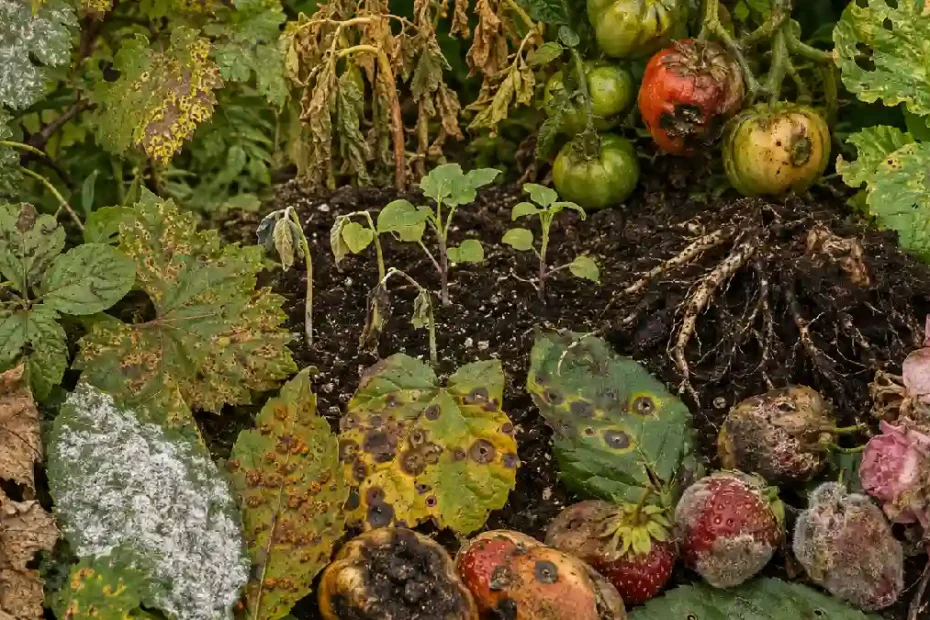
Fungal diseases in agriculture are a common condition that every gardener or farmer deals with every day. Fungi are responsible for an estimated 70–85% of all plant diseases, making them the leading cause of crop and garden plant illness. Fungal diseases have become the most common issue that affects their health, productivity, and lifespan. Mostly noticed in fruits, flowers, vegetables, indoor plants, and garden plants.
Generally, these fungi germinate in humid, warm conditions and spread rapidly through spores, wind, water, and insect contamination. Today, in this Farm blog, we are presenting some of the relatable fungus, their effects, and the way plants can get rid off.
What Are Plant Fungal Diseases?
Plant fungal diseases are basically infections that are caused by microscopic fungi that somehow get into plant tissues, and they then feed on living organic matter—or sometimes, even the dead stuff, honestly. Once they manage to become established, these pathogens begin messing up ordinary plant processes, like photosynthesis, nutrient transport, and the way plants take up water.
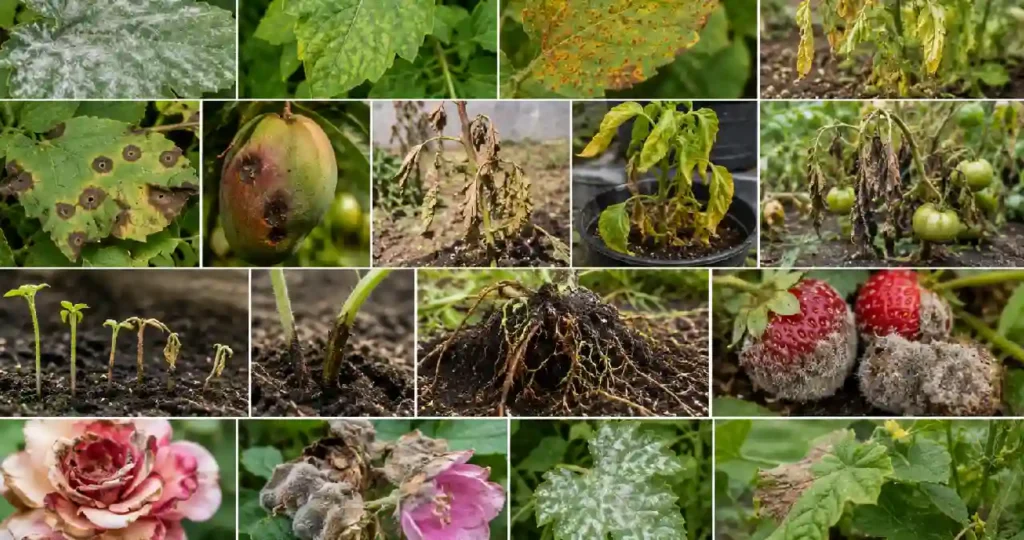
Fungal spores hang around in soil, in leftover crop debris, in weeds, in seed, and in infected plant parts too. When conditions are kind, like high humidity with poor air circulation, they start germinating fast, then kind of move along and spread from one plant to another. Some common conditions include in the germination of the fungus like,
- High humidity
- Repeated rainfall
- Excess watering
- Poor drainage
- Crowded planting
- Warm temperature
Major Plant Fungal Infections, Effects And Remedies
1. Powdery Mildew
Apart from the other fungi, Powdery Mildew is a very common fungal disease that can be easily recognized as it creates a powdery texture on the upper layer of the leaves, stems, flowers, and fruits. The symptoms that are easily noticed include,
- White powdery patches on leaves
- Curled leaves
- Yellow foliage
- Lower flowering
- Erratic growth
Affected plants
- Rose
- Cucumber
- Pumpkin
- Grapes
- Zinnias
- Tomatoes
Effects of Fungus
Although powdery mildew is rare, it doesn’t usually kill the plants straight up, but it definitely weakens them a lot by messing with photosynthesis, so growth becomes kind of poor, and the harvest is smaller or yields lower more often than not.
How to Prevent
There are some best ways to keep control over the fungal infections that includes,
- Remove infected leaves
- Maintain a gap while planting
- Stop overwatering the plants
- Use organic fungicides
2. Downy Mildew
Unlike Powdery Mildew, downy mildew chooses the weather that is cool, moist, and damp to germinate its generation. Some common symptoms that help to recognize that a plant is affected by the infection include,
- Yellow patches on the upper layer of the leaf
- Gray fuzz underneath the leaves
- Leaves start to curl
- Premature leaf drop
Affected Plants
- Spinach
- Basil
- lettuce
Effects of Fungus
Downy mildew knocks down photosynthesis a bit; it then makes plants weaker, and if it gets ignored for too long, it can truly devastate vegetable crops, like it’s not even letting them breathe properly.
How to Prevent Effects
- Allow free air circulation
- Water the soil properly
- Take out damaged leaves
- Apply crop rotation
- Apply approved fungicides early.
3. Rust Disease
Rust fungi can make rusty orange, brown, or yellow sort of pustules right on the leaves and stems. It has some unique symptoms for recognizing the affected area. The symptoms include,
- Orange or reddish spots
- Raised pustules
- Yellow leaves
- Early leaf drop
Common Hosts
- Beans
- Wheat
- Hollyhocks
- Pear tree
Major Effects On Plants
Rust diseases weaken plants by reducing their ability to produce food through photosynthesis.
How To Control The Effects
- Demolish the affected leaves
- Avoid wetting foliage
- Maintain proper spacing
- Apply copper-based fungicides when necessary
4. Leaf Spot Diseases
Many fungal species cause leaf spots that vary in size, color, and shape.
Symptoms
- Brown, black, or tan spots
- Yellow halos around lesions
- Dead leaf tissue
- Premature defoliation
Common Plants
- Tomatoes
- Peppers
- Maple trees
- Hydrangeas
- Indoor plants
Major Effects On Plants
Severe infections just reduce leaf area and, because of that, growth gets a bit slower and fruit production drops.
How To Prevent The Effects
- Remove infected leaves
- Avoid overcrowding
- Improve drainage
- Apply fungicides before disease spreads
5. Anthracnose
This kind of fungus affects the leaves, stems, and fruits of a plant commonly. They are also recognizable through some of the easy symptoms.
- Dark sunken lesions
- Brown leaf edges
- Twig dieback
- Fruit rot
Major Affections
It mostly impacts some very popular fruits and vegetable plants.
- Mango
- Avocado
- Beans
- Shade trees
Result Of Infection
Anthracnose can lead to severe leaf shedding, a real chunk of fruit loss, and even branch dieback, all of it kind of happening at once.
How To Prevent The Loss
- Prune infected branches.
- Remove fallen leaves.
- Improve airflow.
- Apply preventive fungicide sprays during wet seasons.
6. Fusarium Wilt
It’s a kind of fungus that affects the plant’s vascular system. It affects the soil where the crops are growing. Some effective symptoms help to identify the effects in plants.
- Yellowing lower leaves
- Wilting despite moist soil
- Brown streaks inside stems
- Plant death
Plants Commonly Affected
- Bananas
- Watermelon
- Peppers
Ways to prevent
- Plant resistant varieties
- Rotate crops
- Sterilize gardening tools
- Remove infected plants immediately
7. Verticillium Wilt
Verticillium wilt looks kind of like Fusarium wilt, but it hits a wider variety of trees and also many vegetables. It can be a bit confusing at first, because the symptoms may seem similar, but the range is larger and more spread out than people expect.
Symptoms
- Wilting
- Yellow leaves
- Brown vascular tissue
- Branch dieback
Common Hosts
- Maple trees
- Potatoes
- Tomatoes
- Eggplants
Effects
This disease gradually weakens plants and may eventually kill them.
Control
- Improve soil health
- Rotate crops
- Remove infected plant debris
- Grow resistant cultivars
8. Damping-Off
Damping-off is also a kind of soil-borne fungus that occurs in a cool, damp area.
Symptoms
- Seedlings collapse suddenly
- Thin stems near soil level
- Poor germination
- Rotting roots
Effects
Entire seed trays can be destroyed within days.
Control
- Use sterile seed-starting mix
- Avoid overwatering
- Ensure good ventilation
- Disinfect containers before reuse
9. Root Rot
Root rot develops in overly wet soils where fungi attack plant roots.
Symptoms
- Wilting
- Yellow leaves
- Stunted growth
- Black, mushy roots
Effects
Damaged roots cannot absorb nutrients or water, eventually killing the plant.
Control
- Improve drainage
- Water only when necessary
- Repot infected houseplants
- Remove severely damaged roots
10. Botrytis Blight (Gray Mold)
Botrytis thrives in cool, humid conditions.
Symptoms
- Gray fuzzy mold
- Brown flowers
- Stem rot
- Fruit decay
Common Plants
- Strawberries
- Grapes
- Roses
- Geraniums
Effects
Flowers, fruits, and leaves decay under humid conditions quickly.
Control
- Improve air circulation
- Remove infected tissue
- Avoid excessive nitrogen fertilizer
- Apply fungicides if needed
Effects of Fungal Diseases on Plants
Fungal infections seem to touch almost every stage of plant development. Some trouble shows up early on, and they hit seedlings first, while others stay around long enough to ruin mature crops, or even bother ornamental plants more subtly.
Common Reasons for Spreading The Effects
- Wind-blown spores
- Rain splash
- Irrigation water
- Contaminated pruning tools
- Infected seeds
- Soil movement
- Garden insects
- Plant-to-plant contact
- Infected compost
- Human handling
Natural Remedies for Fungal Diseases
There are many chemical options available on the market that may impacts on the plants, as well as the environment. We should choose some organic fungicides that may not harm the plants or natural elements. Some of the popular remedies that work faster and better are,
- Neem oil spray
- Baking soda solution
- Potassium bicarbonate
- Garlic extract spray
- Diluted milk spray (commonly used for powdery mildew)
- Compost tea (when prepared and used appropriately)
- Cinnamon powder for seedlings to help reduce damping-off risk
Natural treatments work best when applied early and combined with good cultural practices.
Conclusion
Fungal diseases are still one of the biggest challenges for gardeners and farmers, but it does not have to turn into a complete disaster. If you spot the symptoms early, tweak the growing conditions, and stick to good garden hygiene, you can reduce the fallout from fungal infections quite a lot. Also, using the right natural or chemical treatments, when needed, helps keep things under control.
FAQs
Q1. What Are The Most Common Fungal Diseases In Plants?
Some of the most common fungal diseases include powdery mildew, downy mildew, rust, anthracnose, leaf spot, Fusarium wilt, Verticillium wilt, damping-off, root rot, and Botrytis blight (gray mold).
Q2. How Can I Tell If My Plant Has A Fungal Disease?
Common signs include white powdery patches, brown or black leaf spots, yellowing leaves, wilting, fuzzy mold, stem lesions, root decay, and premature leaf drop. The exact symptoms depend on the type of fungus.
Q3. What causes fungal diseases in plants?
Fungal diseases are usually caused by fungal spores that thrive in warm, humid, or wet conditions. Overwatering, poor air circulation, overcrowded plants, and contaminated soil or tools can all contribute to outbreaks.
.
Q4. Can Fungal Diseases Spread From One Plant To Another?
Yes. Fungal spores spread through wind, rain splash, irrigation water, insects, contaminated gardening tools, soil, and direct contact between infected and healthy plants.
Q5. Are Fungal Plant Diseases Harmful To Humans?
Most plant fungal diseases do not directly harm humans. However, they can reduce the quality and yield of fruits, vegetables, and ornamental plants, and some may produce toxins that affect crop safety.
Q6. Can A Plant Recover From A Fungal Infection?
Yes, many plants can recover if the disease is detected early and treated promptly. Removing infected plant parts, improving growing conditions, and applying appropriate fungicides or natural remedies can help.
Pingback: What Is Drip Irrigation? Benefits, Types & Cost (2026)
Pingback: Advantages of Drip Irrigation: 9 Proven Benefits & Costs