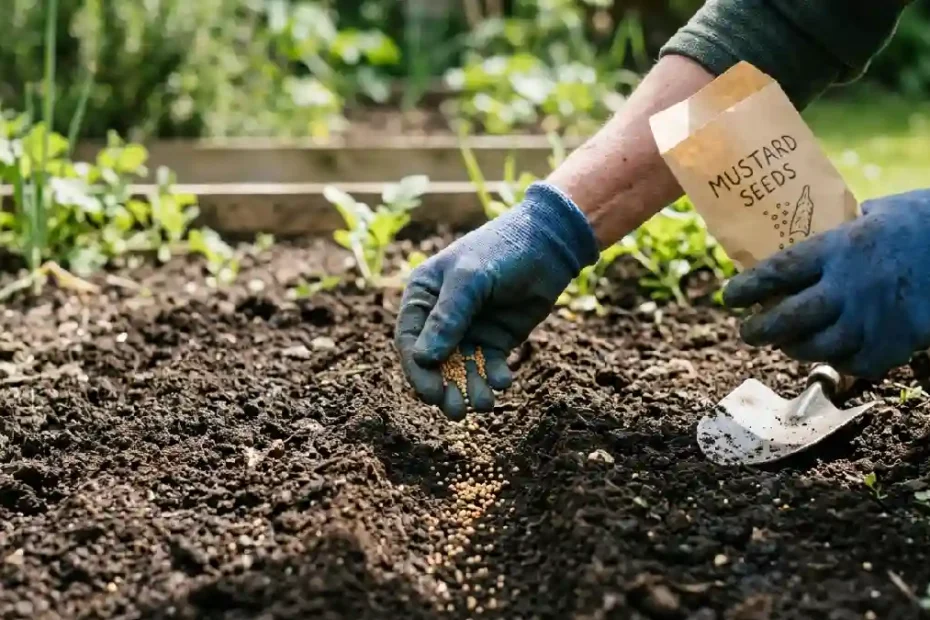
Mustard can be grown at home without much trouble. Some people cook with the seeds as a flavoring. Others eat the leaves like a simple green. You can raise it in a yard bed, in a pot, or in open ground. If you don’t know how to plant mustard seeds, use the steps below to get going.
This plant tends to do best when the weather is not too hot. Give it soil that has plenty of nutrients. Water it regularly, but do not let it sit in soggy ground. It also needs light for a good part of the day. Set up the spot well and keep an eye on the plants, and you should be able to grow mustard from seed even if you are new.
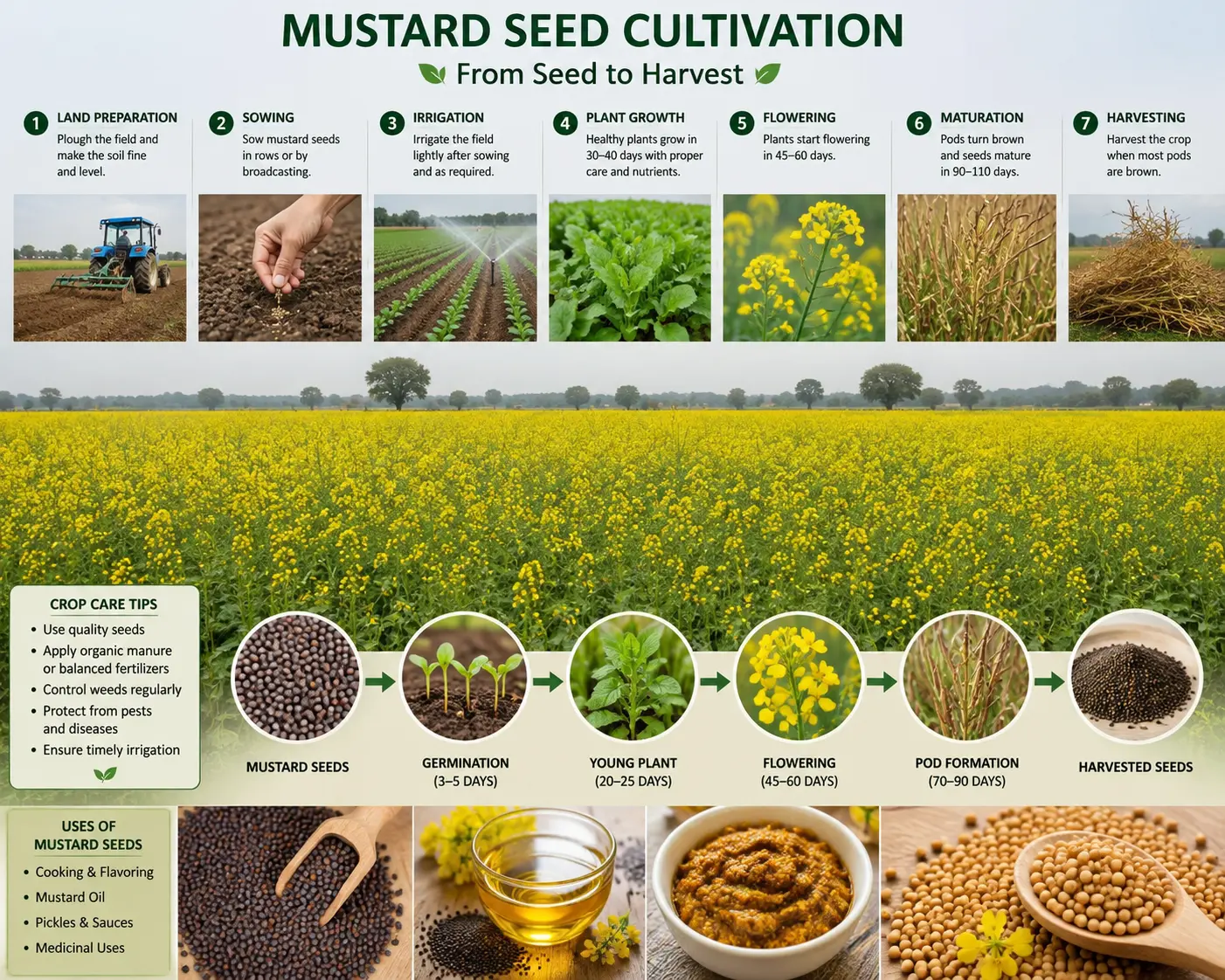
Mustard Plant: Family, Origin, Scientific Name & Other Details
| Details | Information |
| Casual name | Mustard |
| Scientific Name | Brown: Brassica juncea Yellow: Sinapis alba Black: Brassica nigra |
| Family | Brassicaceae |
| Genus | Brassica |
| Type | Annual herbaceous plant |
| Origin | Central Asia and the Mediterranean region |
| Different types | Brown, black, yellow/white |
| color | Yellow, black, or brown |
| Growing season | Cool season |
| Soil | Fertile well drained |
| Sunlight requirement | full |
| Uses | Mustard oil, spices, mustard greens, pickle |
| Plant height | 0.5-1.5 meters |
| Edible parts | Stem, leaves, seeds, young shoots |
| Major Producing countries | India, Canada, China, Russia, European countries |
How to Plant Mustard Seeds: Step-by-Step
Planting mustard seeds is not hard. They can grow in the cooler months of the year.
To get good mustard greens, you will need two key things. Give the plants enough sunlight. Use soil that has plenty of nutrients.
Before you start, get the simple supplies you need, like
- Seeds
- Fertile soil
- Organic manure
- Hoe
- hose
- Container or garden bed (if growing at home)
Step 1: Choose The Location
As mustard plants need plenty of sunlight, choose a spot that gets plenty of sunlight for germination and further growth. If you are growing the plant for seeding, choose a place to manure and flower.
Step 2: Prepare The Soil
Mustard plants grow well in fertile soil. Before planting the seeds, make sure the land is perfectly fertile and well-draining. Remove the weeds, stones, and rubble.
To make the soil healthy, add organic manure to the soil so that it can improve the soil’s fertility.
Step 3: Scatter The Mustard Seeds
After preparing the soil, it is now time to sow the seeds for germination. You can use two different ways to grow greens and for seeding.
- For greens: Thin the seeds or place them at a distance of 1 inch from each other, about ¼-½ inch deep in the soil..
- For seeding: Plant the seeds with a gap of about 3 inches between each one, in straight lines. Keep the rows spaced around 12 inches apart. Add a light layer of fine soil over them. Press it down gently so the seeds stay in place.
| Note: If you are planting in a container or garden bed, then scatter the seeds gently over the soil surface and cover them with soil for germination. |
Step 4: Water The Ground
After scattering the seeds, water the ground gently so that the soil doesn’t get washed away. Rather, add water to the soil so that it gets enough moisture to germinate the seeds.
| Note: Water the soil when the upper layer becomes dry within 1-2 days. |
Step 5: Wait For Germination
The seeds start to germinate within 2-3 days. Sometimes it can take a whole week for germination. The germination process depends on the light that the seeds have.
Step 6: Thin The Seedlings
If you plant too many seeds together, then space them about one inch apart. Leave enough space for the stronger seeds so that the plants get enough space, soil, light, and manure.
Step 7: Add the Manure
If you have already added the fertilizer while preparing the soil, no need to add excessive manure to the soil. If the plants become weak, then add fertilizer to the soil.
| Note: Try to avoid excessive nitrogen fertilizer for improvements. |
Step 8: Control Weeds And Pests
Usually, mustard plants are free of weeds, and it doesn’t get harmed by any deadly pests. When summer arrives, they might be attacked by aphids, beetles, and caterpillars. You can control them through regular inspection.
Which Type Should You Plant?
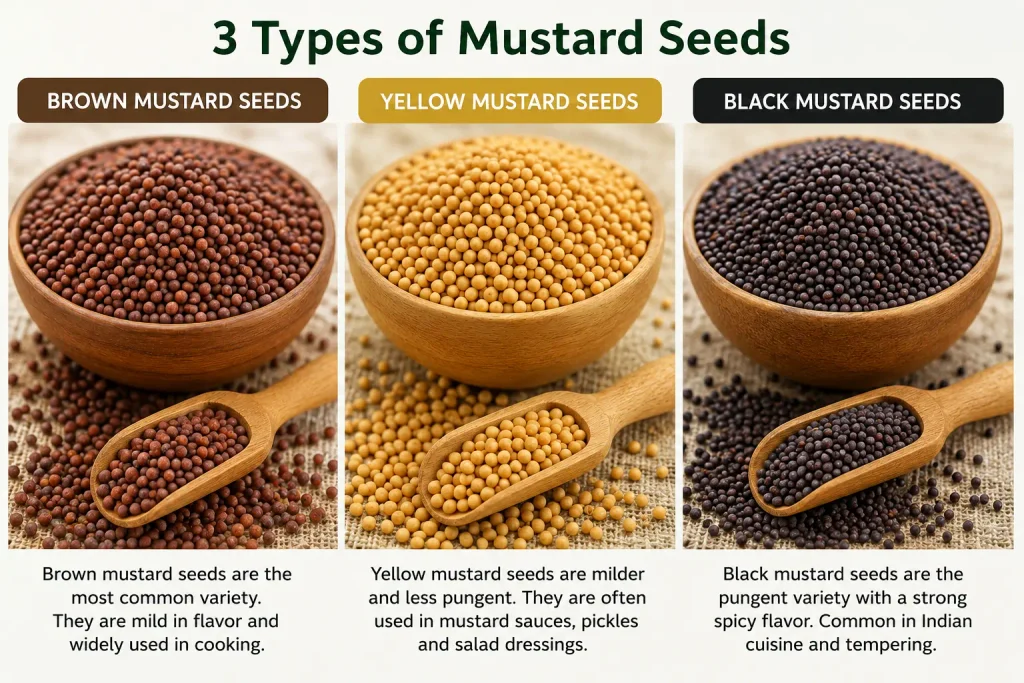
Generally, mustard comes in three different types. The difference lies in flavour, habit, and primary culinary use, habit, and primary culinary uses. Three types of mustard are usually grown in the field.
1. Yellow or White Mustard Seeds (Sinapis alba)
Compared with the other two kinds, yellow mustard tastes softer. The coating on the seed is a bit thicker. That thickness is why the flavour stays mild, and it works well when you make sauces.
2. Brown Mustard Seeds (Brassica juncea)
This type of mustard is very popular in India. It has a very strong flavour that enhances food taste when used as a ground paste.
3. Black Mustard Seeds (Brassica nigra)
Black mustard seeds are widely used in South Asian cooking to temper dishes. They taste sharper and more pungent, and that punch adds depth to the flavor.
Care And Harvesting Tips For Mustard Seed
Choosing mustard for planting is a good choice for green farming. But remember one thing: proper care and harvesting are an important part of growing mustard seeds. Three basic steps are important for growing healthy Mustard plants
- Watering: Don’t forget to keep the soil moist until the germination process starts. It will help the plants grow healthy and later produce healthy seeds.
- Harvesting greens: Pick out outer leaves if they become 4-6 inches long
- Harvesting seeds: Allow the plants to produce the seeds. Harvest the seed pods after they become light brown in colour.
Best Time For Planting Mustard Seeds
The growth of plants depends on the weather conditions that it gets until harvesting. For our Mustard plant, cool and pleasant weather is ideal. In warm regions, the Mustard Plant is mostly cultivated during the winter season. Mustard plants cannot survive in warm weather.
Can Mustard Seed Grow in a Container?
If you love Mustard Greens and prepare dishes with them, you can easily grow it at your garden or kitchen garden. For that, use a container with good drainage and fill it with fertile soil layers. Repeat the same steps that follow while growing it on land.
| Note: Use a bigger container for seed production. Once the mustard plants are mature, they need extra space. Their roots spread out, and the plants also grow taller above the soil. |
Be Aware Of These Blunders While Planting Mustard Seeds
Deeper seed planting
Small seeds struggle in the germination process if they are buried deep inside the soil.
Overwatering
Watering too much can wash out the soil and soil’s fertility. Water only when the soil gets dry.
Crowding the place
Make sure there is enough space for germination and growth of a healthy mustard plant.
Planting in a warm place or weather
When it gets very hot, the plants may start to flower too early. That can lower the crop quality.
Neglecting pests
Ignoring the small insects can lead to an unwanted result. Try to inspect regularly for a better result.
Final Thoughts
Mustard seeds are not hard to grow if the basic conditions are right. Use soil that drains well and holds enough nutrients. Loosen the ground first, then scatter the seeds and cover them lightly. Keep the surface damp while they sprout, but do not soak the area. Give the plants enough sun and watch the weather so they stay in a comfortable growing range. If you keep up with simple care, you can pick tender leaves for eating or wait for the pods to mature for harvest.
FAQs
Prepare loose, fertile, well-draining soil and sow mustard seeds about ¼–½ inch deep. Cover them lightly with soil and water gently. Keep the soil consistently moist until the seeds germinate.
Mustard is generally a cool-season crop. The best planting time depends on your local climate, but it is usually planted during the cooler months rather than during extreme heat.
Mustard seeds can germinate within several days under suitable conditions. Warmth, moisture, seed quality, and soil conditions can affect germination speed.
No, you do not need to soak mustard seeds before planting. Mustard seeds are small and can be sown directly into moist, well-prepared soil. Keep the soil evenly moist after planting to encourage quick germination.
Keep mustard plants away from other brassicas, beans, and root crops to protect them from pests.
A balanced fertilizer such as 10-10-10 (N-P-K) can work well for mustard greens because it supplies nitrogen, phosphorus, and potassium. Mustard greens especially benefit from adequate nitrogen, which supports healthy leaf growth.
The best month to plant mustard greens depends on your local climate, but they generally grow best during cool weather. In many regions, September through November is a good planting window for a fall crop.