A healthy life lies in humanity’s most essential food sources. When you search for the essential source, it can be found beneath the earth as root crops. In today’s timeline, modern agriculture protects root crops from harsh winters, droughts, and food storage. Now these underground energy sources need more protection, as health-conscious eaters and chefs have discovered that more nutrition is essential in the present day.
Today, in this article, we are going to discuss the essentials about these powerhouses and the way they can be saved for the future.
What Are Root Crops?
According to botanical science, root crops are crops that grow under the soil and are enriched with a high volume of good, healthy essentials. Root crops, or Root vegetables, use their energy and nutrients in their roots differently. For many decades, people have used them as rich sources of energy. Let’s get to know how they are different from each other.
Before we dive into the essentials of the roots, let’s know the different types of roots, their essentials, and differences.
- True Taproots: That plant’s primary anchor root kind of bulges up as it keeps sugars along with nutrients; it’s like a pantry down underground. Think of carrots, parsnips, beets, radishes, turnips, and even rutabagas.
- Tuberous Roots: Thickened lateral rootlets, sort of designed for plant survival, are what you get here. Sweet potatoes and cassava, also called yuca, fall squarely in that same group.
- Stem Tubers: Swollen underground stems, not roots, with “eyes” or buds, from which new sprouts grow. The world’s most loved side dish, the white potato, is the classic stem tuber-like thing.
- Bulbs & Rhizomes: Modified leaves or horizontal stems that store essential oils and sugars, such as onions, garlic, ginger, and turmeric.
Common Types Of Root Crops
| Root Crop | Flavor Profile | Key Nutritional Benefit | Best Cooking Method |
| Carrot | Sweet, earthy, crisp | High Beta-Carotene (Vitamin A) | Roasted, raw, blended into soups |
| Sweet Potato | Rich, caramel-like, sweet | High Fiber, Vitamin C & A | Baked whole, mashed, air-fried |
| Beetroot | Deep, earthy, slightly sweet | Nitrates (heart & stamina support) | Pickled, roasted, juiced |
| Parsnip | Nutty, sweet, peppery | Packed with Folate & Potassium | Roasted alongside meats, mashed |
| Radish | Peppery, crisp, sharp | Glucosinolates (liver support) | Raw in salads, quick-pickled |
| Cassava (Yuca) | Mild, nutty, starchy | Gluten-free complex starch | Boiled & fried, tapioca flour |
The Common Thread: No matter what botanical family it comes from, each root crop kind of works like a natural storage battery; it pulls in sunlight and turns it into more complex carbohydrates, dietary fiber, and then concentrates micronutrients too.
Why Root Crops Matter In Agriculture
Root Crops usually save the essential nutrients from the soil in their roots. This helps the roots become stronger and contributes to their growth in agriculture. Farmers give priority to them as they:
- Able to adapt to any soil condition
- Produce high-quality yields
- Consider any weather condition
- Long shelf life
- Help improve food security
How To Grow Best Root Crops
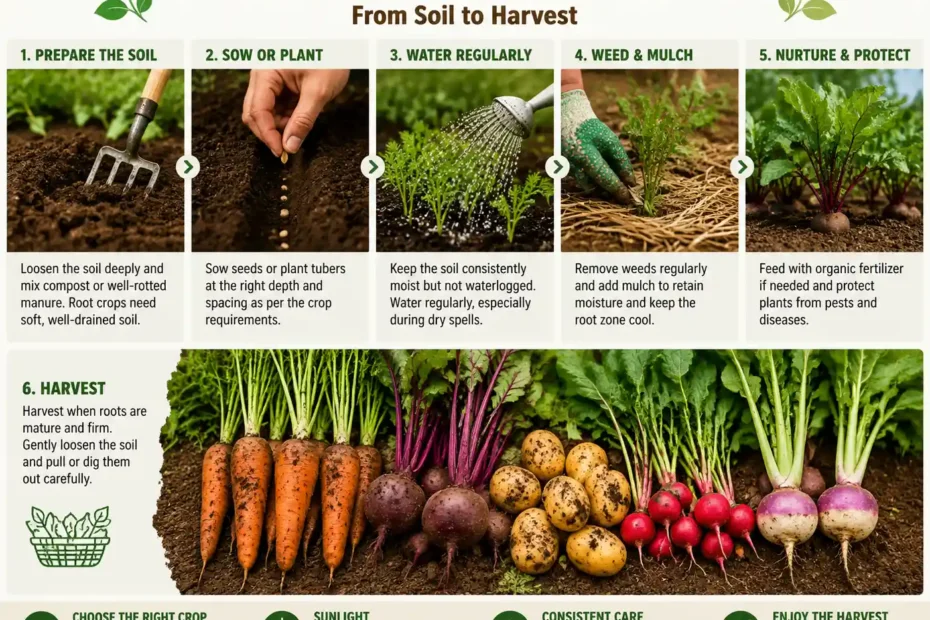
Best crops are the result of a good process of producing the crops. It depends on some essential steps that should be followed to grow such root crops properly.
Soil preparation
Soil is the base of producing good quality crops. Well-drained, but not too compact, so the roots can spread out nicely. If the ground is damp or heavy clay, you can improve it with organic compost before planting and it really helps.
Planting
Most root crops like it cool, or at least not too warm. Seeds, or the planting stuff you use, should be set at the right spacing, so the roots can develop properly and in a nice uniform way.
Watering
Keeping the moisture level consistent helps growth stay even, and it feels kind of steadier. If you water too much, the roots might start rotting, quietly at first. On the other hand, if a drought hangs around for too long, you could end up with very small roots, or even roots that look cracked, not exactly lush at all.
Fertilization
For healthy roots and their development, balanced fertilizer is an essential ingredient.
Weed control
While planting the crops, the weeds can kind of hold the plants back from developing; it’s annoying. Removing the weeds limits their grip on nutrients and moisture, and also helps cut down on pest habitats. If you want to learn how to manage weeds in agriculture, take a look at the article Advantages of Green Manure Crop.
Harvesting system
Harvest timing: it kind of depends on the crop variety and what you have in mind to use it for, so it isn’t always identical. Just generally, mature vegetables seem to have a richer taste, and they also last longer for storage. Do the next stage right away after gathering root crops, like don’t pause too much, and then continue with what comes after.
- Remove excess soil gently.
- Avoid bruising or cutting the roots.
- Cure crops like potatoes and sweet potatoes before storage.
- Store in cool, dark, and well-ventilated conditions.
Environmental and Storage Advantages
Beyond just nutrition, root crops bring a bunch of other, kind of practical plus agricultural perks that people end up liking a lot:
Exceptional Shelf Life: Even though leafy greens can go limp in just a couple of days, a lot of root vegetables, like potatoes, carrots, and winter radishes, can stay usable for months if you keep them cool, dark, and slightly humid, the sort of way you would in a root cellar.
Climate Resilience: Since the edible part ends up growing underground, root crops get a natural shelter from the light frosts, the rough gusts, and the surface pests that like to hang around. Even if the weather starts becoming unpredictable, they still somehow manage to keep being reliable staple foods.
Soil Health Benefits: Deep taproots, like radishes and daikon, behave like natural tillers. Loosening up the compacted ground, also pulling nutrients from down in the deeper layer, lifting them back toward the upper zone, so over time the surface soil ends up with a nicer little boost.
Challenges While Growing Root Crops
- Farmers and gardeners might run into a bunch of troubles
- Like poor soil drainage, and then root rot shows up too
- Plus pest infestations that suddenly get out of hand.
- Sometimes the watering rhythm is uneven, so plants look off in that slow way.
- There can also be nutrient deficiencies, soil compaction where the ground feels hard as a brick, and weed competition creeping in almost quietly.
With regular monitoring, plus solid agricultural practices, most of these problems can be kept pretty low.
How To Produce Better Root Crops
To get better root crops, the very first step is to produce them properly. To give them a better environment to grow, they must follow the golden rules.
- Choose disease-resistant varieties.
- Rotate crops every season.
- Use fertile, loose soil.
- Water consistently but avoid waterlogging.
- Apply organic mulch to retain moisture.
- Harvest at the recommended maturity stage.
- Store crops under proper conditions.
5 Science-Backed Reasons to Eat More Root Crops
Root crops are very essential crops in agriculture, as well as human life. As they are enriched with a handful of nutrients, they are also helpful to nourish our diet. They should be present in our diet for a few reasons, which are,
Packed with minerals and antioxidants
As root crops are grown deep underground, they contain multiple nutrients. Due to their deep rooting process, it absorbs important minerals and antioxidants directly from the soil. They are concentrated in inorganic nitrates that convert to nitric oxide in the human body. It improves blood vessels and keep blood pressure under control. Like orange and sweet potatoes, which are enriched with beta-carotene, which is good for eyes and immune defense.
Steady, long-lasting energy
Unlike the more refined grains, which seem to trigger blood sugar spikes and then, this energy crash later, root crops are packed with complex carbohydrates and soluble fiber. They digest slowly, and that tends to keep you satisfied for hours, plus they give this steady release of physical fuel. So, it’s no surprise they’re a common go-to for athletes and also for busy professionals, kind of either way.
A Feast for Your Gut Microbiome
Root vegetables, like Jerusalem artichokes (sunchokes), onions, and sweet potatoes, have high amounts of prebiotic fibres, such as inulin. These fibres move through your stomach undigested, and they end up feeding the helpful bacteria that live in your gut, which in turn helps digestion, lowers inflammation, and really supports your overall immune strength.
Natural Climate Insurance
Long before refrigerators showed up, root cellars kept whole towns fed through those really brutal winters. Lots of root crops like potatoes, carrots, and winter radishes can hang around fresh for a few months, as long as they’re stored cool, dark, and well ventilated. Basically it’s nature’s most endurable shelf-stable food, really.
Unbeatable Culinary Versatility
Think about another ingredient family that can slide from a hearty savory dinner roast straight into a velvety soup, a crisp salad, or even a dessert. Yeah, like carrot cake and purple ube pie. Root crops in particular, they really change their whole vibe depending on the way you treat them: raw, they bring this bright, peppery crunch. When you cook them, though, they soften up, go tender, then end up sweeter and more comforting.
Secrets To Cooking Root Crops Like A Pro
In modern days, chefs are focusing on saving and cultivating more crops; they are becoming more sensitive to using them properly. They suggest that the best way to use the root crops is to caramelize them so that the nutrients get locked within them rather than boiling or smashing.
The Golden Rules of Roasting Roots
- Cut uniformly: Cutting the heavy roots in a thin format can help them to cook properly. Softer roots like sweet potatoes and carrots can be cut into discs as they get cooked very fast.
- Don’t skimp on fat: Before pouring the roots, don’t forget to grease with olive oil, or the fat can burn.
- High heat: Always roast the roots at high heat ad it helps break down the sugar content and caramelize them
- Enough space: Overcrowding the palate where the roots are cooking can be accused of destroying the available nutrients within it.
Are Root Crops Sustainable?
As roots are great holders of high nutrients and are enriched with antioxidants, they are sustainable. In comparison with other foods, root crops have long storage life and also help in reducing food waste. This makes the crops valuable for sustainable farming and food security.
Conclusion
Root crops still end up being one of the world’s most valuable food categories because they sort of tie together nutrition, adaptability, cheapness, and consistent production. In other words, whether you are growing carrots in your backyard, or working with potatoes on a farm, or just having roasted sweet potatoes at dinner, these underground vegetables deliver crucial micronutrients and steady harvests. And since worldwide demand for wholesome and more sustainable food keeps moving upward, root crops will stay kind of an indispensable piece of agriculture and healthy eating.
FAQs
Root crops are plants grown primarily for their edible underground parts, such as roots, tubers, bulbs, or rhizomes. Common examples include potatoes, carrots, sweet potatoes, beets, cassava, and radishes.
Root vegetables develop from a plant’s root system, while tubers are enlarged underground stems that store nutrients. For example, carrots are true roots, whereas potatoes are stem tubers.
Sweet potatoes, carrots, beets, and turnips are among the most nutrient-dense root crops, offering vitamins A and C, fiber, potassium, and antioxidants.
Yes. Many root crops are high in fiber and water, helping you stay full longer. Choosing baked or steamed preparations instead of fried versions makes them a healthy addition to a weight-loss diet.
Cassava and potatoes are among the richest root crops in carbohydrates, making them excellent energy sources and staple foods in many regions.
Absolutely. Many root crops, including carrots, radishes, beets, and potatoes, are easy to grow in home gardens or even in raised beds and containers with loose, fertile soil.
The growing period varies by crop. Radishes may mature in 25–40 days, while carrots typically need 60–80 days, and potatoes often require 90–120 days.
Some root crops, such as carrots and turnips, have a relatively low glycemic impact. Others, like potatoes and cassava, should be eaten in moderation as part of a balanced meal. Individuals with diabetes should follow advice from their healthcare provider.
Common problems include root maggots, wireworms, nematodes, aphids, fungal root rot, and bacterial diseases. Crop rotation and healthy soil management help reduce these risks.
Yes. Most root crops can be peeled, cut, and blanched before freezing. Properly frozen root vegetables maintain their quality for several months and are convenient for future cooking.