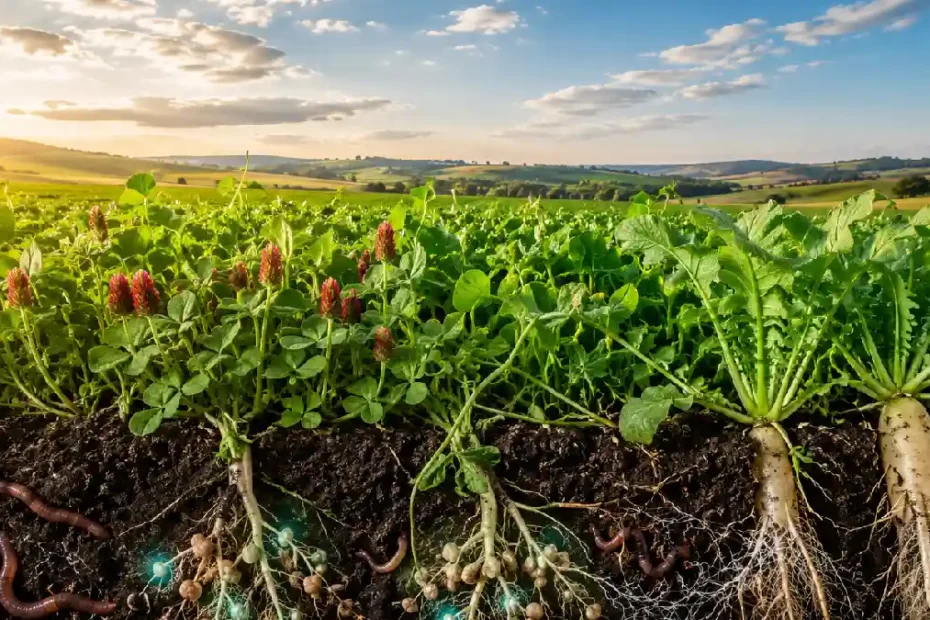
In a time where modern cultivation has to juggle not only feeding a growing worldwide population but also trying to undo environmental damage, attention is starting to drift back toward the old, tried and true ecological farming ways. Among them, green manure crops seem to stand out as one of the better, more sustainable, and cost-effective strategies for getting the soil back in order.
Green manure crops — plants grown specifically to be incorporated into the soil while still green — represent one of agriculture’s most effective sustainable practices. Often called ‘living fertilizer,’ green manures work by harnessing natural biological processes to enrich soil, fix atmospheric nitrogen, and build long-term fertility without dependence on synthetic chemicals.
As global agricultural systems face mounting pressure from soil degradation, water scarcity, and rising fertilizer costs, green manure crops offer a practical, proven, and cost-effective solution backed by centuries of farming tradition and modern soil science.
What Is Green Manure?
Before stepping into the history of green manures and their advantages, let’s explore the identity of green manure.
Green manure is considered to be beneficial for those crops which are generally harvested for improving the soil quality and to prevent the use of synthetic fertilizers. Moreover, the green manures are mostly used to add nutrients to the soil and improve its health by adding nitrogen. The green manure process not only prepares the soil ideal for growing faster crops but also improves its quality. As the process is to plough green manure crops, no grains are cultivated.
After mixing with the soil particles, the green manure crops can quickly get dissolved with the soil and increase the healthy particles of soil faster. It spreads on the upper level of the ground, which converts into a soil conditioner.
Content Highlights: Top 7 Advantages of Green Manure Crops
- 1. Natural Nitrogen Fixation and Nutrient Enrichment
- 2. Radical Improvement of Soil Structure
- 3. Enhanced Water Retention and Drought Resilience
- 4. Explosion of Soil Biodiversity
- 5. Highly Effective Weed Suppression
- 6. Bio-Fumigation and Pest Management
- 7. Mitigation of Soil Erosion
Types Of Green Manure Crops
Green manure crops hold the nutrient bacteria in their roots, which work as a nitrogen converter for the soil. These crops drag the nitrogen from the air and mix it with the soil to increase the soil nutrients and nitrogen level. Let’s find out the types of green manure crops.
1. Leguminous Crops (Nitrogen Fixation)
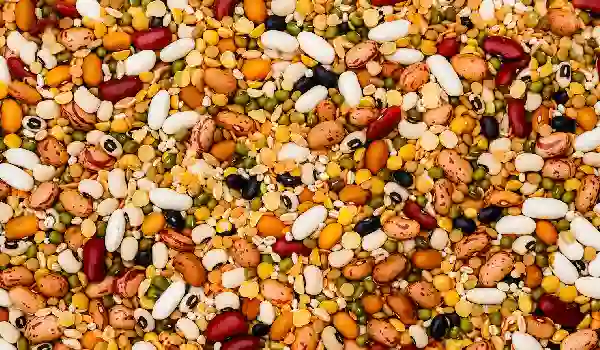
Leguminous crops refer to those crops that produce seeds inside pods, like beans, peas, and all kinds of lentils. Belonging to the bean family, the seeds are enriched in high protein and fibre. Apart from that, these crops are essential for human healthy living as well as livestock forage and soil improvement.
Key Benefits of Leguminous Crops
- Natural Nitrogen Fixer: Leguminous crops work as nitrogen fixers as they are responsible for increasing the nitrogen quantity in soil. They hold Rhizobium bacteria in their roots, which are liable to produce natural ammonia from the nitrogen present in the air. This converted ammonia is useful to improve the soil condition and give the crops support to grow healthy.
- High nutrient value: Leguminous crops or the edible lentils are the powerhouse of high protein. Consuming these leguminous products can be a source of increasing proper vitamins, minerals, and dietary fibres in the human body.
- Hold health and sustainability: Naturally improving the soil, the green manure crops prevent the need for synthetic or harmful fertilizers for disinfecting. While using green manure corp is a better way to improve soil functions, develop its capacity and prevent degradation.
Types of Leguminous Crops and Benefits Table
| Leguminous Crops | Nutrition Intact | Benefits(environment) | Benefits(health) |
| Soyabean | Plant Protein, Amino acid, Carbohydrates, Mineral, Vitamin K, V-B2, V-B1 | Nitrogen Fixer, used as a natural biofuel | Take good care of your heart. Strongen bonesPrevent hormonal imbalancePrevent night sweat |
| Cowpea | Protein, Carbohydrates and Fat, V-B9, V-C&A, Iron, Potassium, Zinc & Copper, Calcium | Soil erosion preventionPrevent weed suppressionIdeal for health treatments in a drought situation | Control hunger hormones Manage blood sugarImprove heart healthImprove digestionPrevent anemia |
| Lentil | Protein, Potassium, Iron, Calcium, Calories | Helpful greenhouse gas emission | Boost energyProvide antioxidantEase digestion issues |
| Lima Bean | Calories, Protein, Fat, Fibre, Phosphorus | Control harmful pesticide attacks | Healthy for the heart Mange weightDetoxification |
| Clover | Calcium, Magnesium, Iron, Potassium | Weed and erosion controller | Control menopausal symptomSupport the respiratory system |
| Faba bean | Fibre, Flote, potassium | Improve soil conditionSupport pollinators | Increases the daily flow in the bloodDevelop brainStrong bones |
| Green gram | Protein, Manganese, Magnesium, Phosphorus, Potassium, Zinc | Nitrogen fixer | Perfect for weight lossResolve heart diseaseImproves digestionBoosts immunityProvides nutrition(in pregnancy) |
2. Non leguminous crops (soil structure and weed control)
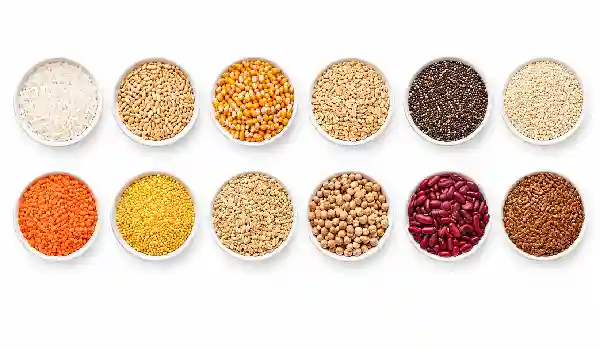
Non-leguminous crops are kinds of crops that do not belong to the legume family. They are completely different from the leguminous plants’ structures and functions. They do not belong to any seed family, nor do they fix nitrogen in the soil through the symbiotic mode. Let’s just check out different kinds of non-leguminous plants and their benefits.
Key Benefits of Non- Leguminous Crops
- Improve soil biochemistry: It does not convert the air nitrogen to improve the soil configuration. Rather, it prepares the soil in organic matter and connects with microbial communities, which helps to continue the soil nutrients cycle.
- Nutrient Scavenging: Non-legumes have this fine, fibrous root system, which can work pretty well for scooping up leftover nutrients, such as residual nitrogen from whatever crops showed up before. And that kind of prevents fertilizers from draining down into groundwater. So over time, it also keeps things a bit cleaner, in a practical sense.
- Sustainable economy: The non-leguminous crops are rich in high fibre and nutrients, and they are highly demanded. Thus, it increases the economic level.
Types of Non- Leguminous Crops and Benefits Table
| Non-Leguminous Crops | Nutrition Intact | Benefits(environment) | Benefits(health) |
| Wheat | Calories, Water, Protein, carbs, fibre, fat | Control high blood pressureImprove digestion | Boosts fibreImprove digestion |
| Maize | Calories, Carbohydrates, protein, V-C | Boost crop protein levels and grain quality | Improve eyeControl blood sugar |
| Sugarcane | Energy, potassium, magnesium | health control Renewable energyZero-waste processing | Keep dehydratedBoost energy Support liver |
| Barley | Vitamins, minerals, B-6 content, Sodium, Fibre | Enhance organic matterNutrient scavenging | control cholesterolBalanced sugarControlling hunger hormones |
Note: Wheat and Maize are used as green manure when planted specifically as cover crops and incorporated before grain development.
The Multifaceted Advantages of Green Manure Crops
1. Natural Nitrogen Fixation and Nutrient Enrichment
While understanding the green crop manure crops, it is as important to discover the green manure crops’ advantages to improve the farm and create sustainable agriculture. In crop cultivation, green manure is a very important element that further improves the quality of the soil.
While Earth’s atmosphere is approximately 78% nitrogen, plants cannot absorb nitrogen in its gaseous form. Leguminous green manure crops solve this problem through biological nitrogen fixation — a process where Rhizobium bacteria living symbiotically in root nodules convert atmospheric nitrogen into ammonium, a plant-available form.
A well-established leguminous green manure crop can fix between 50 and 150 kilograms of nitrogen per hectare — equivalent to significant quantities of synthetic fertilizer. Unlike synthetic nitrogen, which releases quickly and risks leaching into groundwater, biologically fixed nitrogen releases gradually as the plant matter decomposes, providing sustained nutrition aligned with crop growth cycles.
This slow-release mechanism also means the nitrogen remains plant-available over weeks rather than days, reducing waste and improving nutrient use efficiency.
2. Radical Improvement of Soil Structure
Soil is not just a single natural element; it is a mixture of various important components. It is also a complex dynamic composed of four main elements (mineral matter, water, air, and organic matter), which may be eroded or destroyed by the chemical farming and heavy machinery compaction.
Green manure crops sort of work as natural plowing helpers :
- Deep Root Penetration: The green manure crops are ideal for improving the soil structure and its condition to cultivate healthy crops. Green crops such as Radish beet roots have long taproots, which create a natural channel for aeration and water infiltration.
- Humus formation: When the green manures decompose it converts to humus. This humus plays a pivotal role in binding the tiny soil particles into stable aggregates. As a result, the soil textures improve, and sandy soils get a better way to retain the soil moisture, which makes the soil workable.
3. Enhanced Water Retention and Drought Resilience
We are all much aware of droughts, which are a pivotal part of cultivation. In the present day, the intensifying droughts ( in places where it is mostly found), conserving soil moisture is paramount. In contrast, green manure crops help to boost the soil’s water-holding capacity to counter the drought situation.
Green manure’s decomposed organic matter fundamentally changes the physical structure of soil. Research consistently shows that each 1% increase in soil organic matter enables soil to retain approximately 20,000 additional gallons of water per acre. As farmers regularly incorporate green biomass, soil progressively develops a sponge-like structure with superior water-holding capacity.
During heavy rainfall events, this improved structure absorbs water rather than allowing surface runoff — reducing erosion and flood risk. During drought periods, enhanced moisture retention keeps crops viable longer, reducing irrigation dependency and improving yield stability under variable weather conditions. This water retention advantage is particularly significant in regions experiencing more frequent and intense drought cycles.
4. Explosion of Soil Biodiversity
The soil has become the house for those microscopic bacteria and beneficial insects. Thus, it is considered the engine room of the nutrient cycle. In the present day, many farmers use synthetic fertilizers, which often dry out due to the biological activity of sterilization. On the other hand, using the green manure crop as a natural fertilizer works in an eco-friendly way. It supports conserving the soil microbes and also boosts the soil’s organic matter to boost beneficial microorganisms.
Role of soil microbes
- Fungi: These fungi under the soil prepare a network with root-like structures to maximize the uptake of water and beneficial nutrients.
- Earthworms: Earthworms prepare the soil and boost its nutrients by digging through green decaying plant matter.
5. Highly Effective Weed Suppression
Natural weeds are the dependents of other plants. They used to steal the light, healthy nutrients and beneficial matter from the other plants. Many farmers used to remove these weeds, whether using chemicals or managing them manually. Here, both processes are expensive or labour-intensive.
To prevent the weed spreading, growing Green manure crops can be a great option. In the process of smothering the green mature crops, such as cluster bean, cow pea, and gliricida sepium, grow rapidly and prevent the sunlight from reaching the ground. This makes the soil dense and prevent to grow the weed or it;’s seeds.
6. Bio-Fumigation and Pest Management
Bio-fumigation is one of green manure’s most specialized and valuable advantages. When Brassica family crops — particularly mustard (Brassica juncea), oilseed radish, and turnip — are incorporated into soil, they release glucosinolate compounds during decomposition. As these compounds break down, they produce isothiocyanates: naturally occurring volatile chemicals with proven pest and pathogen suppression properties.
These natural compounds are effective against:
- Soil-borne fungal pathogens (Fusarium, Verticillium, Pythium)
- Root-knot nematodes (Meloidogyne species)
- Certain weed seeds
- Some soil-dwelling insect pests
Research from the University of Idaho and Pacific Northwest farming programs has documented 50-90% reduction in specific soil-borne diseases following well-managed bio-fumigation green manure rotations. (Verify and cite specific studies)
To maximize bio-fumigation effect: incorporate brassica green manure when plant tissue is highest in glucosinolates (at flowering bud stage), chop finely before incorporation, and seal the soil surface temporarily to concentrate the fumigant gases.
7. Mitigation of Soil Erosion
The farm’s most valuable asset, the topsoil, is idle for the cultivation of crops. But this layer may be affected or destroyed due to the heavy rain and the forces of wind. This particular situation is responsible for soil erosion.
Green manure crops work as a cover over the top soil and prevent the raindrops from falling directly on the top soil. Their presence in soil keeps the topsoil safe, reducing erosion. Their deep, strong roots anchor the soil particles in their place and prevent soil erosion.
Economic and Environmental Sustainability
Apart from its agronomic advantages, green manure crop also makes profound economic and environmental sense.
From an environmental standpoint, cutting back on reliance on synthetic nitrogen fertilizers helps lower the farm’s carbon footprint. Making synthetic nitrogen, through the Haber-Bosch process, is wildly energy-intensive, and it also ranks as a big driver of greenhouse gas emissions. On top of that, since organic nutrients from green manure can sort of grip soil particles quite tightly, the chances of chemical seepage into groundwater, and nutrient overflow into nearby waterways, which then triggers destructive algal blooms, are radically reduced.
In contrast to the economy, the use of green manure crops reduces the expenses of expensive fertilizers, pesticides and herbicides. Over successive seasons, the added improvements in soil fertility and the way it’s structured end up meaning higher, more stable cash crop yields, so it kinda proves that ecological stewardship and financial profitability can go together, hand in hand.
6Steps To Grow Your Green Manure Crops
If you love your farm and have a deep connection with your plants, utilize the natural elements that are responsible for growing a healthy crop. Planting the fast-growing crops and turning them into an organic fertilizer, you are adding organic matter to the soil. Check out the steps of green manure crop cultivation for your farm today.
Step 1: Choose your crop
Select your seeds that are ideal for the soil and climate. Selecting crops should be bearable of the structure below
| Category | Name | Functions |
| Legumes | Beans, peas, lentils | Drag atmospheric nitrogen in soil |
| Cereals | Wheat, maize, millet | Fast-growing crops |
| Biofumigants | Radish | Remove soil pests |
Step 2: Prepare the perfect soil
A perfect soil works as a womb where the plant explores its life. Before growing your green manure crops, the soil you select should be ideal and preferable for the growing crops. The soil should be clear and should be dug well.
Step 3: Plough the seeds
After digging the soil well with a hoe, plough the seeds with bacterial inoculant. This can help to draw more nitrogen from the air. Cover it with the mixture of soil and allow water to grow better.
Step 4: Give protection and food
As soil has some bacterial particles in its core, you should be aware of them. Let the soil be moist until the seeds germinate. Protect the area to prevent unwanted disturbance till germination.
Step 5: Harvest before flowering
There are rules to harvest the green manure crops. The crops should be cut down before its flowering (6-8 weeks), unless it will become weeds. It should be cut from the ground level.
Step 6: Convert into natural fertilizer
About 2 to 4 weeks before you plan to plant your next cash crops, go ahead and lightly turn the cut green manure into the top layer of your soil. Then let it sit, so it can rot, break down, and generally decompose, which in turn releases those natural nutrients back into the ground where they’re needed most.
Conclusion
In today’s timeline, green manure crops play a vital role in farming, as well as humans. Allowing green manure crops to develop soil conditions and make it a fertile part is the best solution for the farm. The best part of this solution is that they are budget-friendly, harmless and effective at the same time.
Landholders who are still searching for a solution to grow their farming business and prepare a good economy, they are welcome to adopt this process of farming. Green manuring enriches the soil with vital nitrogen, rebuilds the soil structure, reserves water and naturally controls pests and weeds. There is no other way to bring changes in cultivation which is budget-friendly and harmless for the crops that are growing rapidly.
FAQs
Sunn hemp (Crotalaria juncea) is among the fastest-growing and highest nitrogen-fixing green manure crops, capable of fixing 100-150 kg of nitrogen per hectare in 6-8 weeks. Other excellent nitrogen-fixing options include crimson clover, vetch, cowpea, and field beans — each suited to different climates and growing seasons.
Incorporate green manure 2-4 weeks before planting cash crops. This allows sufficient decomposition time to release nutrients and avoids the ‘nitrogen immobilization’ window where fresh organic matter temporarily ties up available soil nitrogen during the initial decomposition phase.
Leguminous green manure crops (clover, vetch, beans, cowpea) fix atmospheric nitrogen through symbiotic Rhizobium bacteria in their roots, directly adding nitrogen to soil. Non-leguminous green manure crops (mustard, radish, rye, buckwheat) do not fix nitrogen but contribute organic matter, improve soil structure, suppress weeds, and in the case of brassicas, provide bio-fumigation benefits.
Yes. Green manure crops are equally effective in small garden plots. Buckwheat is ideal for summer use in small spaces (fast-growing, attractive to pollinators). Winter field beans or winter rye work well for overwintering bare soil. Simply sow, allow to grow, cut before flowering, and dig in or use as a surface mulch.
Studies suggest green manure can reduce synthetic nitrogen fertilizer requirements by 40-70% in subsequent crops, with additional savings on herbicides (due to weed suppression) and irrigation (due to improved water retention). The FAO estimates that well-managed green manure programs generate $3-5 return per $1 invested in seed costs over a 3-year period.
For heavy clay soils, tillage radish and daikon are particularly effective — their deep, thick taproots penetrate compacted layers, creating channels for drainage and aeration. Once the roots decompose, these channels remain, fundamentally improving clay soil drainage. Oats and rye also work well for clay soils, adding organic matter that improves texture over time.