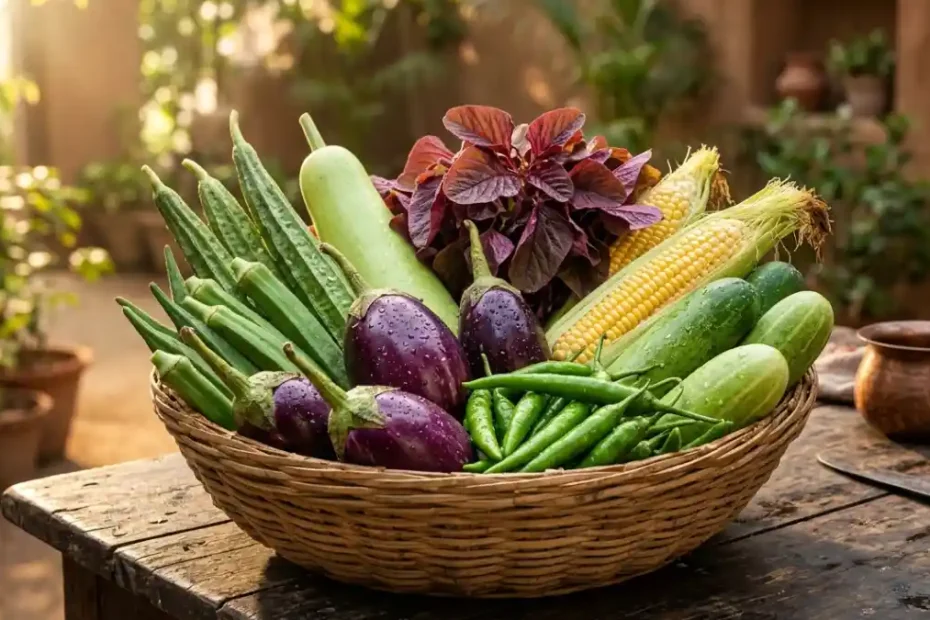
The scorching heat of the summer prevailed in India, making it really hard to tolerate sweating and dehydration. While some opt to eat ice cream and cold drinks for the immediate gratification to cool off their body, choosing some summer vegetables would be a prudent choice that delivers healthy benefits to the body.
The warmth of sunlight during the vibrant days of summer creates the perfect backdrop for vegetables to thrive and grow. Here in the blog, I will shed light on 10 summer vegetables that would be ideal to be planted under indian climatic conditions during the summer days. Read the blog to dig out each one of them.
Why the Indian climate is ideal for growing summer vegetables
The sub-tropical and tropical climate India witnessed makes it ideal for sowing summer vegetables. The longer days of summer act as a triggering factor that drives steadfast growth of plants, and the warmth of the temperature here makes the fruit ripening process efficacious and quicker.
In most of the areas, the weather is hot and intensifies with the progression of summer, making a perfect backdrop for vegetables to thrive and grow.
The intense sunlight, moderate humidity, and warm temperatures in India are quintessential to making it ideal for growing summer vegetables. To know the exact whereabouts, read the rationale of each mentioned below.
Intense Sunlight: Most summer vegetables demand a bare minimum of 6 hours of sunlight as their daily requirement. The persistence of longer daylight hours in India acts as a supercharger to speed up the process of photosynthesis. It is nothing but a gateway for plants that they leverage to make food from sunlight to ensure better harvests.
Warm Temperatures: Tomatoes, brinjal, and okra (bhindi) are summer vegetable which has an affinity for heat for growth and development. India has consistently witnessed warm springs, and the summer temperatures here are ideal for plant growth without letting them face any compromise that acts as a deterrent to hinder their growth due to cold damage.
Humidity: Moisture is ideal for the growth of Gourds (bitter gourd and bottle gourd) and cucumbers. The existing humid climate in India is instrumental in keeping plants healthy and acts as a beacon to speed up vegetable production.
10 Summer Vegetables to Plant in India this summer
Summer is an ideal season for the growth of a myriad of vegetables in India. If you want to know 10 important summer vegetables that are ideal to be planted in India for the time being, let’s keep in touch with the information shared below.
1 of 10 Brinjal
Brinjal is a low-calorie vegetable that is known in India as eggplant. Consumption of this warm, seasoned vegetable is good during the summer. Brinjal is a summer vegetable as it demands sunny weather and warm temperatures for growth, and never tolerates cold and is highly sensitive to it. Frost is incompatible with brinjal, and starts to transplant brinjal after frost ends.
The presence of prodigal sunlight and warm temperatures acts as an ideal support for brinjal cultivation. 22°C to 30°C is ideal for making the crop thrive, and always choose fertile soil for its cultivation.
Soil requirements: Loamy soil acts as an anchor to support the roots, and it acts as a deterrent to prevent waterlogging. The ideal pH profile of soil must lie between 5.5 and 7.0 for the brinjal.
Water requirements: Never provide excess water, as it brings serious damage to the roots and makes them susceptible to disease-related risk.
During the entire facet of the crop cycle, balanced irrigation ensures the development of fruit and the growth of the vegetable. For the retention of soil moisture, mulching is important, and never let the waterlogging happen, as it is detrimental to the process of brinjal cultivation.
Spacing: The spacing must be kept between 45–60 cm in plants, while it is ideal to keep them 60–75 cm apart between rows.
Time to harvest: Harvesting regularly supports the continuous process of fruiting and positively encourages it. 60 to 90 days after transplanting is ideal for brinjal harvesting.
Health benefits: The versatile vegetable Solanum melongena, also known as Brinjal, is known for its outstanding fibre content. The vegetable contains an impressive array of vitamins and minerals, too. The high fibre content present in eggplant makes it ideal for keeping blood sugar under control.
2 of 10 Cucumber
Belonging to the Cucurbitaceae family, the Cucumis sativus, known as the cucumber, is a perfect example of a summer vegetable ideal for supporting hydration. Growing cucumbers at home is not an arduous task; you need to keep them in a well-drained & moist soil environment that is not waterlogged.
During the process of preparing the field, it is crucial to remove crop residue, weeds, and stones. Meanwhile, mixing the manure and composting it into the soil acts as a beacon to support better moisture retention and fertility improvement.
Water stagnation acts as a deterrent for the viable growth of roots, and hence, it is a prerequisite to make furrows and ridges as per the condition of the soil texture.
Soil requirements: The ideal soil profile for cucumber is well-drained & fertile loamy soil. The ideal pH value for growing brinjal is 6.0 to 7.0.
Water requirements: For germination, fruit and flower development, cucumber demands regular moisture. Drought stress is not good for cultivating cucumber, and skipping the process of overwatering is a good step for the cultivation of cucumber
Spacing: The recommended spacing in open fields is 1.5 to 2 meters for row spacing, while it requires 45 to 60 cm for plant spacing.
Time to harvest: Depending upon the condition of growth and distinct varieties of the cucumber, it is ideal to harvest them within a time period of 35 to 60 days after sowing.
Health benefits: Cucumber acts as a refreshing vegetable that supercharges your body and assists in reducing the dark patches and skin puffiness in your skin, visible on scorching summer days.
To know why it is important to include the humble green vegetable in your daily diet, read the Farm’s article titled ” Adding Cucumber To Your Diet- 20 Health Benefits You Need To Know”, to discover the health benefits of the cucumber. Cucumber has high water content (96%) and is rich in fibre, potassium, and magnesium.
3 of 10 Pumpkin
Belonging to the Cucurbitaceae family. Pumpkin is an ideal summer vegetable, rich in dietary fibre and a good source of antioxidants and vitamin A. Fertile and well-drained soil equipped with organic matter is ideal for the cultivation of Pumpkin. Waterlogged fields act as a deterrent, bringing stress to the root and encouraging the progression of disease. Composting and manure support the process of retaining moisture.
Soil requirements: The ideal pH value for growing pumpkin lies between 6.0 and 6.8.
Water requirements: The germination, flower, and fruit development of Pumpkins need an environment that provides consistent moisture support.
Spacing: For standard pumpkins, the ideal spacing for planting pumpkins is 5 to 6 feet apart in rows that are generally spaced 10 to 12 feet apart.
Time to harvest: The usual time for pumpkin harvesting is generally ideal when they are tender and young. A delay in harvesting them makes the fruit appear shaggy and large, resulting in declining market quality. Avoid hard frost, as it brings forth a reduction in appearance and storage life. The ideal time for harvesting pumpkins generally happens between late August and early September.
Pumpkins usually have a requirement of 90 to 120 days to fully grow. Pumpkin comes under summer vegetables as they require 15.5°C to 32°C temperature for growth and necessitate the demand for 3 to 4 months under the influence of hot sun to attain fully mature conformation.
Health benefits: Pumpkin is a good source of dietary fibre that enables you to feel fuller and lessen the need to take more food, thereby lowering the need to eat more. Eating pumpkin gives you the essential amino acid tryptophan, which is an instrumental component of serotonin production, acting as a component that makes your body feel better and helps regulate your body clock and appetite.
It comes under the nine essential amino acids that our body is unable to produce, demanding the need to consume them from outside food. Pumpkin contains beta carotene, making it a good component for our vision.
4 of 10 Lady’s Finger/ Okra
Okra, also known as ladies’ fingers. It is a flowering plant that has a vegetable pod containing calcium, iron, zinc, and magnesium. It is also a good source of vitamins A, E, and K.
Variety Recommendation For India:
Among the top varieties of bhindi, Parbhani Kranti and Arka Anamika are some of the heat-tolerant varieties. These are seen as widely available at Indian nurseries.
Soil Preparation: Well-drained loamy soil is ideal for the cultivation of Lady’s Finger, and it demands a pH value of 6.0-6.8. For making a proper preparation of soil, an individual need mixing 1 part garden soil and 1 part cocopeat with 1 part compost.
Spacing: 30-45 cm between plants; 60 cm between rows. For containers: minimum 12-inch pot per plant.
Water requirements: Lady’s Finger demands watering deeply every alternate day in the summer, as they are acting as a good practice for Okra cultivation.
Times to harvest: Pick pods at 7-10 cm length (every 2-3 days). Overgrown pods become tough and need to be harvested regularly.
Health Bonus: Consumption of Okra acts as an immunity booster, and the presence of vitamin A within it makes it ideal for quicker healing. This summer vegetable, Okra, contains folate that renders 15% of a woman’s daily needs for this nutrient.
According to the data from Healthline, folate is a component that helps to lower the risk of conditions that pose a detrimental effect on the brain and spine seen in pregnant women during fetal development. In the summer, eating the vegetable help you to supercharge your body, keep yourself energized, and help to keep your body cool.
5 of 10 Sweet Corn
Zea mays var. saccharata is a rewarding summer vegetable serving as an excellent source of energy, dietary fibre, and some antioxidants. To ensure better pollination, it is ideal to grow sweet corn plants in blocks. Sunny locations with rich soil are preferable. Sowing seeds directly is a good method and avoids transplanting the seedlings.
Soil Requirements: Fertile, well-drained soil that has been filled with plenty of organic matter are iodeal soil profile for sweet corn cultivation. Keep the pH value 5.8–7.0 to ensure the thriving growth of sweet corn.
Water Requirements: Consistent moisture is quintessential to drive their nourishment, especially during ear development and tasseling.
Spacing: 60–75 cm between rows, 20–30 cm between plants.
Time to Harvest: 60–90 days is the ideal time frame for harvesting after the transplantation is done.
Health Benefits: A good source of energy, dietary fibre, and antioxidants. The vitamin A content within it supports eye health and also has some essential B vitamins, coupled with vitamin C, to encourage healthy cell growth and is helpful to combat the harmful free radicals.
6 of 10 Green Chillies
Capsicum annuum, commonly known as green chilli, belongs to the Solanaceae family are regarded as an excellent summer vegetable for its multifaceted health benefits.
Soil requirements: Well-drained loamy soil is ideal for the cultivation of green chilli, while the ideal pH profile lies between 6.0 and 6.8.
Water requirements: Never overwater the green chilli. During the scorching heat of summer, if you see the top 1 inch of the soil where the plant is placed feeling dry, then water it. If you indulge in overwatering, it will lead to a loss for the chilli plant and cause a detrimental impact on leaves and flowers, resulting in their drop off.
Spacing: For pots, if you have made up your mind to use a deep container measuring 10-12 inches with large drainage holes, it would be ideal for a single plant.
In case of cultivating them in garden beds, it is recommended to keep the spacing of the plants 12 – 18 inches apart to mitigate root competition. Providing ample sunlight coupled with airflow between them should be a judicious move.
Time to harvest: The ideal months for planting green chilli are usually February to March. After the transplantation is done for green chillies, they are ready to be harvested within 60 to 90 days. If the fruits are snipped off for a regular interval by the use of scissors, it can lead to an encouragement for the production of flowers.
Health Bonus: Green chillies are an important vegetable in the summer season, containing dietary fibre that helps to cleanse the colon and regulate bowel movement. Green chilli may aid in supporting weight loss and acts as an important vegetable that brings forth metabolism improvement and assists in steady calorie burning.
These are ideal summer vegetables that provide remarkable health benefits, supporting us to remain healthy, and the vitamin C within it give antioxidant properties.
7 of 10 Bottle Gourd
The summer vegetable Lagenaria siceraria, known as Bottle gourd, prefers assistance to get support for growth under the influence of climbing assistance. The high water content within the bottle gourd is capable of quenching our thirst and supporting our body to keep it hydrated.
Soil requirements: Well-drained loamy soil is ideal for the cultivation of Bottle Gourd. It is also important to keep the soil moist, not to make it become soggy, as the sogginess of soil is derived from air that is also essential for the growth of roots, or it will die. The pH profile of the soil must lie between 6.5 and 7.5, which would be helpful for the plant to thrive.
Water Requirements: Regular deep watering is an ideal option for cultivating Bottle Gourd. It is ideal to keep the soil moist but never let it become soggy.
Spacing: 1–1.5 m between plants, 2 m between rows.
Time to Harvest: The harvesting time frame is 60–80 days after the successful plantation. Harvest young fruits at regular intervals.
Health benefits: The high water content within the Bottle Gourd promotes hydration and acts as a beacon that aids digestion and supports the weight loss process. Bottle gourd contains magnesium and calcium, and is a rich staple for vitamins B and C complex.
8 of 10 Ridge Gourd
Ridge gourd is quintessential to serve as a quality summer vegetable that is competent enough to thrive under hot, warm, and humid climates.
Soil requirements: Like the Bottle Gourd, Ridge gourd also requires loamy, moist soil that would be helpful for the plant to thrive. Never let the soil become soggy. While keeping it moist is beneficial, this is because sogginess deters the passage of air, thus blocking the root from getting air and eventually dying.
Water requirements: The water requirement for the bottle guard is moderate, but for the process of flowering to happen, the ridge guard demands consistent moisture.
Spacing
Time to harvest: After successful transplantation, the ideal time for harvesting the ridge guard is from 55 to 70 days.
Health benefits: The high nutritional profile and cooling properties they have make them ideal to beat the heat in summer and keep your body supercharged with their natural cooling process to never let you feel exhausted.
The rich fibre content and high water content make them an excellent vegetable for the weight loss process and are instrumental in relieving us from constipation issues.
9 of 10 Cowpeas
Cowpeas, scientifically known as Vigna unguiculata, are an important summer vegetable as they are able to thrive under extreme heat. Planting them during the summer is ideal as they contain a good nutritional profile and are ideal for providing benefits to both soil health and the garden. Sowing them directly in well-prepared beds is important for cultivating the Vigna unguiculata. They are competent enough for nitrogen fixation in the soil.
Soil Requirements: Well-drained soil with a pH profile between 5.5 and 6.5 allows cowpeas to thrive and grow.
Water Requirements: Moderate watering is ideal for cultivating the cowpeas.
Spacing: the ideal spacing for coepeas is 30–45 cm between rows, while it is recommended to keep them 10–15 cm between plants.
Time to Harvest: After their successful transplantation is done, it is ideal to keep them for 55–75 days to render the harvesting process successful.
Health Benefits: Cowpeas contain a rich source of essential vitamins, like vitamin A, B1, B2, B3, B5, B6, C, and folic acid. Besides this, they are a good source of copper, phosphorus, and iron, making them a summer hero. The cowpeas contain soluble fibre that makes them ideal in terms of supporting the weight loss process.
10 of 10 Red amaranth
Belonging to the Amaranthaceae family, red amaranth is an iron-rich vegetable and contains a myriad of vitamins that include vitamins A, B, and C. Temperatures between 20°C and 30°C are suitable for amaranth cultivation, and it demands a warm climate followed by a prodigious amount of sunlight to thrive.
Soil requirements: Red amaranth is a summer vegetable that grows well in nitrogen-rich soil that is well-drained.The ideal pH profile for amaranth lies between 6.0 and 7.5.
Water requirements:
Water requirements: Little watering can lead to a toughening of the plant, while on the contrary, excessive watering can cause a rot of the root. In a week, 2.5 cm or 1 inch of watering is justified.
Spacing:
Time to harvest: After the successful transplantation, they are ready to be harvested in 30 to 45 days.
Health benefits: The vegetable is overloaded with iron, calcium, and vitamin K, ideal for bone strengthening, an immunity booster, and management of anaemia.
Indian Summer Vegetables: Planting To Harvest Timeline
Let’s check the information in the table to know their scientific name, followed by the best & favaouarable time to plant and harvest in India.
| Vegetable | Scientific Name | Best Time to Plant | Days to Harvest | Harvest Window |
| Brinjal (Eggplant) | Solanum melongena | February – April | 60-90 days | May-July |
| Cucumber | Cucumis sativus | February – April | 45-60 days | April-June |
| Pumpkin | Cucurbita maxima | February – May | 90-120 days | June-August |
| Lady’s Finger (Okra/Bhindi) | Abelmoschus esculentus | March – May | 50-60 days | May-July |
| Green Chillies | Capsicum annuum | February – April | 70-90 days | May-July |
| Bottle Gourd | Lagenaria siceraria | February – June | 60-80 days | April-August |
| Ridge Gourd | Luffa acutangula | February – June | 55-70 days | April-August |
| Cowpeas | Vigna unguiculata | March – July | 55-75 days | May-September |
| Sweet Corn | Zea mays var. saccharata | February – April | 60-90 days | May-July |
| Red Amaranth | Amaranthus cruentus | March – June | 30-45 days | April-August |
Essential Tips for planting & growing summer vegetables
If you have made up your mind to grow summer vegetables during the summer season, always keep these essential tips in mind, as mentioned below in table format.
| Factors worth considering | Key Advice for Growing Summer Vegetables |
| Soil Mix | Use a well-draining approach for better navigation, supported with cocopeat + garden soil + rich organic compost for the management of growth. |
| Gardening Method | Pots, grow bags, or vertical gardens are ideal for growing summer vegetables in small spaces. |
| Sunlight | Keep them under direct sunlight daily for 5–6 hours. Place on the terrace or balcony. |
| Watering | Deep watering is recommended in the early morning & evening only. Try to avoid keeping them under midday heat. |
| Pest Control | Go organic: Always remember to use neem oil, garlic, or chilli sprays to never let insects do any harm to summer vegetables. |
| Fertilizers | Homemade compost is the best fertiliser. Use kitchen peels, cow dung, and banana peels for the best nutrition. |
Final thought
Planting summer vegetables in India is an ideal choice that demands sufficient sunlight, warm weather, and water for their better growth and nourishment. Never let the summer heat act as a deterrent to sidetrack your dream of gardening summer vegetables. It does not matter whether you are a beginner or someone interested in gardening; the proper approach lets you produce bountiful vegetables in the summer season.
Frequently asked questions
In India, excellent choices to plant vegetables in summer include chillies, tomatoes, cucumbers, and okra.
Summer is ideal for vegetables like cucumbers, okra, and green chillis, which grow the fastest, yielding more crops within a matter of weeks.
Vermicompost, neem cake fertiliser, and compost are all great organic fertiliser options suitable for summer vegetables.
To avoid excessive evaporation, it is ideal to water summer vegetables in the morning or evening, and it is important to water deeply once a day for summer vegetables.