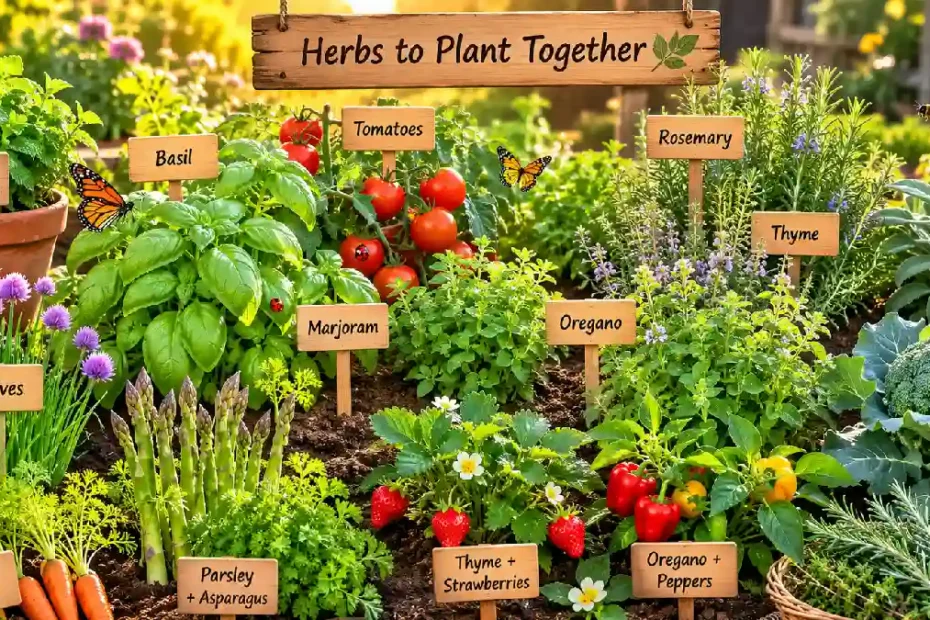
Companion planting, the strategic pairing of herbs based on compatible growth requirements, pest-repelling properties, and mutual benefits, is one of the most effective techniques for healthier herb gardens with fewer chemical inputs.
The right herb pairings improve flavor, deter pests, attract beneficial insects, and maximize space. The wrong pairings result in stunted growth, pest vulnerability, and wasted gardening effort.
This Farm guide covers 10 proven herb companion pairings, the herbs that should never grow together, the best herb-vegetable combinations, and a growing conditions chart to help you plan the most productive herb garden possible.
What Is Companion Planting?
Companion planting is the intentional positioning of plants that benefit each other when grown in proximity. In herb gardening specifically, companion planting exploits the natural properties of certain herbs, their scent, root structure, chemical releases, and attractive/repellent effects on insects to create a mutually beneficial growing environment.
Indeed, it also acts as a shield to make them pest repellent and protect them from the deleterious consequences. The mutual share of water and nutrients among the companion plants makes them ideal to bring forth an improvement in soil health to guarantee the backdrop for a balanced gardening ecosystem.
Factors to Consider to Grow Herbs Together
Myriad factors need to be taken into consideration to ensure the herbs grow well together, and are listed below:
- Location: It is often seen among herbs that some are becoming good companions by sharing the same type of nutritional profile, soil & sunlight requirements. Location, meanwhile, advocates a vital role as an essential parameter for herbs in their tendency to grow together. Rosemary, thyme, and oregano are sun-loving and grow well in sunlight, while mint, cilantro, and parsley don’t require as much sunlight but prefer partial shade & less exposure to direct sunlight for their growth.
- Nutrient: Herbs with an intense scent are indicative of the presence of rich nutrients within them. It is meanwhile capable of reaching the nutrients of one herb to another located in proximity through social, air, and water. Considering the positive effect, the nutrients of a herb even influence the disease tolerance, growth, and taste of other herbs.
- Growth: Two herbs grow at the same rate without making any interference to cause any outgrowing of the other, and generally thrive better without causing any undesirable side effects when grown side by side.
10 herbs to plant together with compatible pairing
Let’s have a look at the 10 herbs, their scientific names, who are ideal to build a compatible pairing with them & the rationale behind.
| Herb | Scientific name | Good Companions for compatible pairing | Why They Are Worthy |
| Basil | Ocimum basilicum | Oregano, Marjoram | 1. Credible enough to deter the repellent nature of aphids, mosquitoes, and flies. 2. Strengthen the overall improvement of flavour and growth of neighbours located in proximity. 3. Suitably Pairs with oregano and marjoram. |
| Chives | Allium schoenoprasum | Tarragon, Oregano, Sage, Thyme | 1. Chives are ideal to repel aphids & deter unnecessary fungal issues. 2. They are capable of attracting pollinators. 3. They somehow help to strengthen the enhanced flavour of neighbours. 4. Avoid overly dry spots for growth and survival |
| Bay | Laurus nobilis | Rosemary, Sage, Thyme, Oregano | 1. Adds height and structure. 2. Capable of repelling insects. 3. They are ideal for growing under dry, sunny conditions with Mediterranean herbs. |
| Thyme | Thymus vulgaris | Rosemary, Sage, Oregano, Marjoram, Bay, Tarragon | 1. Thyme is drought-tolerant. 2. Know the mechanism of how it repels cabbage moths & pests. 3. Fosters the improved growth of many herbs. 4. Excellent companion in dry soil. |
| Marjoram | Origanum majorana | Oregano, Basil, Rosemary, Sage, Thyme | 1. Marjoram is ideal for making an Improvement of flavor of basil. 2. Marjoram grows in dry soil and grows well in sunlight. 3. Have been equipped with a pest-repelling scent. 4. It grows exceptionally well in Mediterranean mixes. |
| Oregano | Origanum vulgare | Rosemary, Thyme, Sage, Marjoram, Basil, Chives | 1. Oregano has a strong pest-repelling scent, make them ideal to deter plants from being eaten. 2. Stimulation and encouragement of neighbouring growth. 3. Oregano is highly compatible with other Mediterranean herbs as they share a similar flavour profile and the same environmental requirements. |
| Rosemary | Rosmarinus officinalis | Thyme, Sage, Oregano, Marjoram, Bay | 1. Know the process of how pests are repelled. 2. Rosemary is drought-tolerant and is a structural plant. 3. Compatible with woody Mediterranean herbs. |
| Tarragon | Artemisia dracunculus | Chives, Basil | 1. Tarragon is a French herb that forms a synergistic relationship with chives. 2. It is compatible with similar conditions that are dry-loving and ideal for herbs sharing similar conditions. 3. Tarragon has pest-repelling properties |
| Sage | Salvia officinalis | Rosemary, Thyme, Oregano, Marjoram, Bay | 1. They generally grow in bushy areas and know the process to repel pests. 2. They belong to the Mediterranean region and share the preferred dry or alkaline soil to grow with compatible herbs. 3. Pairs well with oregano. |
| Mints | Mentha spp | Plant Alone in Pot (or near Chives) | 1. They know the means of action to fight against cabbage moths & ants and repel them. 2. Mints propel pollinators through the sweet nectar but are by nature invasive. 3. They grow incredibly well with moisture-lovers, but crowd other herbs not compatible with Mints, thus making them not ideal or compatible enough to plant together. |
Nutrition comparison table of herbs
| Herb | Serving Size | Calories | Protein | Fat | Carbohydrates | Fiber | Sugar |
| Basil | 2 tbsp (5g) fresh chopped | 1 | 0.2g | 0g | 0.1g | 0.1g | 0g |
| Chives | 1 tbsp fresh | 1 | 0g | 0g | 0g | – | – |
| Bay Leaf | 1 tbsp crumbled | 5.5 | 0.1g | 0.1g | 1.3g | – | – |
| Thyme | 1 tsp fresh | 0.8 | 0.044g | 0g | 0.2g | 0.1g | – |
| Marjoram | 1 tsp dried | 1.63 | 0.076g | 0.042g | 0.363g | 0.242g | 0.025g |
| Oregano | 1 tsp dried | ~2.65 | 0.09g | 0.04g | 0.69g | 0.42g | 0.04g |
| Rosemary | 1 sprig | 3.9 | 0.1g | 0.2g | 0.6g | 0.4g | 0g |
| Tarragon | No detailed info | Low (~1-3 per tsp) | Trace | Trace | Trace | Trace | Trace |
| Sage | 1 tsp (0.7g) ground | 2 | 0.1g | 0.1g | 0.4g | 0.3g | 0g |
| Mints (Peppermint) | 1 tbsp fresh | 1 | 0g | 0g | 0g | <1g | 0g |
Best Combinations of Herbs and Vegetables
If you are opting to get thriving crops that are mutually beneficial, you need to organize them strategically. Let’s see some of the best combinations of herbs and vegetables.
1. BASIL + TOMATOES: Basil and tomatoes are quintessential to serve as the perfect classic pair of herbs and vegetables. The repellent nature of basil against aphids, whiteflies, and tomato hornworms makes it a perfect pair with tomatoes. According to research, basil may assist in making an improved tomato flavor. Basil is ideal for planting within 18 inches of where tomatoes are planted.
2. DILL + CABBAGE FAMILY (Brassicas): Dill is competent to attract beneficial wasps, which are ideal to prey on aphids and cabbage worms. This indeed makes Dill a compatible match with the cabbage family or Brassicas. Apart from cabbage, the dill makes a good pairing with broccoli and kale. Avoid keeping dill near carrots, as they deter their growth.
3. ROSEMARY + BEANS: Rosemary and beans are a compatible planting pair. Beans are advocating the role of natural fertilizer, helping to add nitrogen to the soil. Rosemary repels bean beetles and saves beans from the attack. Carrots and cabbage make an ideal pair with Rosemary.
4. CHIVES + CARROTS: Chives repel carrot flies. One of the most documented companion planting partnerships in horticultural literature. When carrot plants and chives grow in proximity, chives help improve the taste and subtle texture of their neighbour’s carrots. Chives act as a deterrent to aphids and other pests, rendering any unintended harm.
5. OREGANO + PEPPERS: The strong scent of oregano confuses and acts as a strong deterrent to prevent any harm from pepper pests. Both thrive under the same soil conditions and the presence of sunlight.
6. SAGE + BRASSICAS (Cabbage, Broccoli, Brussels Sprouts): When planted nearby, Sage repels the activities of cabbage moths, cabbage worms, and carrot flies.
7. PARSLEY + ASPARAGUS: Parsley and asparagus make an ideal companion pair, as both encourage the growth of the other without any harm. Parsley repels the asparagus beetle, thereby making them an ideal pair.
8. MINT + BRASSICAS: Mint acts as a repellent to deter cabbage moths and aphids. Keeping the plant in a container near brassicas helps to deter the further spread of mint
9. THYME + STRAWBERRIES: Thyme repels worms that may attack strawberries and helps to improve flavor when grown in proximity.
10. BASIL + PEPPERS: Basil helps to repel pests from peppers while both thrive in identical sunny conditions. They encourage each other’s growth and act as a compatible pair.
Best Herbs for Companion Planting by Growing Conditions
Matching herbs are necessary to make them capable of thriving together as per the growing conditions.
| What Growing Conditions they need, type | Best Herbs to Plant Together | Key things worth remembering |
| Mediterranean (Dry) | Lavender, Rosemary, Oregano, Sage, Thyme | Full sun, dry/rocky soil |
| Moisture-Loving | Basil, Parsley | Moist soil + plenty of sunlight |
| Lemon-Scented | Lemon Thyme, Lemon Verbena, Lemon Basil | Plant together for lemon flavor |
| Mints | All mint varieties (Lemon mint, Orange mint, Apple mint, etc.) | Invasive — plant only with other mints; can cross-pollinate |
WHAT NOT TO PLANT TOGETHER
Some pairings are incompatible and come under the category that would never be planted together. Let’s have a look at the information below to know myriad incompatible pairings and why they are never to be painted together. Mediterranean herbs (rosemary, thyme, oregano, sage) should never be paired with moisture-loving herbs (basil, parsley, cilantro) as they are fundamentally incompatible.
1. MINT + MOST OTHER HERBS The spread of Mint is aggressive and occurs via underground runners. This somehow deters neighbouring plants through crowding out. Henceforth, it is advisable to plant mint in containers.
2. FENNEL + ALMOST EVERYTHING: The allelopathic chemicals released by fennel act as a deterrent to restrict the growth of most other plants. It is often seen that tomatoes, basil, and most herbs grow poorly while they are in proximity to fennel. It is required to give fennel its own isolated bed so as not to render any deleterious impact.
3. BASIL + SAGE: Sage inhibits the steadfast growth of basil. Despite both basil and sage being popular herbs, they are generally incompatible with each other, sharing feeble companionship.
4. ROSEMARY + MINT: The requirement for water is not the same between rosemary and mint. Rosemary has a preference for dry conditions, while consistent moisture is ideal for mint. Together, keeping them makes it obvious that one will suffer.
5. DILL + FENNEL Problem: Thes cross-pollinatation between the two closely relatable plant result the genesis of flowerless hybrid seeds that fail to please anyone.
6. DILL + CARROTS (MATURE DILL) Mature dill is an inhibitor of carrot growth, acting as a deterrent to its steadfast development. Although Young dill may be considered an acceptable form, never indulge in mature dill, which should always be kept away.
7. CILANTRO + FENNEL: The allelopathic effect of the fennel suppresses the germination of cilantro and its obvious growth.
Final thought
In the end, selecting the right companion herbs is invaluable in order to create a healthier & garden with more productivity while lessening the number of pests in a natural manner. It doesn’t matter what you’re intending to grow; it may be Mediterranean herbs like rosemary and thyme, or something like moisture-loving herbs such as basil and parsley.
Knowing the compatibility and matching them with plants that have similar needs for growth leads to better harvests. This guide helps you plan your herb garden confidently and enjoy the outcome of growing plants throughout the entire season.
Frequently asked questions (FAQs)
No, it is not possible to plant all herbs together. The needs for water, sunlight, and space differ from herb to herb. Putting the wrong ones jeopardizes the other to die while fighting for survival food.
Rosemary and basil can grow near each other as both prefer full sun and well-drained soil. However, water requirements differ: rosemary is drought-tolerant, while basil prefers more consistent moisture. Position them together, but water basil more frequently. They aren’t the ideal pairing; basil grows better with oregano or parsley, and rosemary grows better with thyme and sage.
Herbs such as basil, thyme, and oregano are instrumental in supporting the improvement of vegetable growth by attracting pollinators, repelling pests, and supporting insects that are beneficial.
It is recommended to never plant mint with most herbs, as their growth is invasive. Never pair moisture-loving herbs with drought-tolerant herbs because the watering needs vary between them.