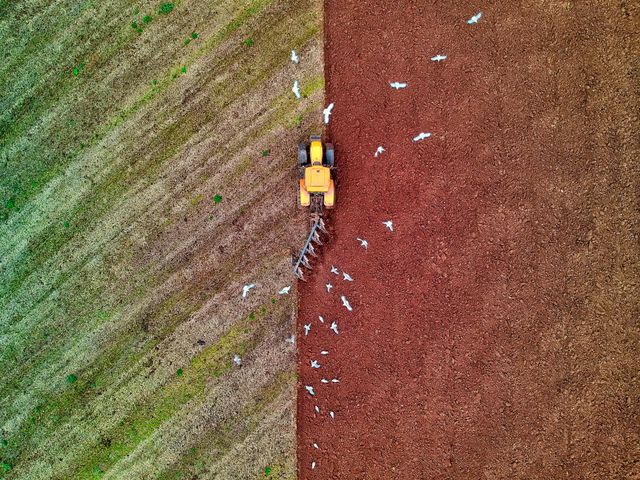
The food demand is skyrocketing with the population outburst. This is why intensive farming is no longer optional but a necessary practice for the global ecosystem. When the population surged and arable land shrank, the forward push for intensive farming practice started to forge. Sounds interesting, and you think what Intensive Farming is all about, right? Intensive farming is a type of agricultural practice aiming to bring forth bountiful production from limited land usage.
This method yields higher production of crops to meet the growing demand for affordable food on scale. Despite the rippling benefits of enhanced productivity and use of arable land facing shrinkage, it also has some overuse complications. It is henceforth making the deterioration of soil health & hard hit environmental sustainability.
Resource overuse and increased dependence on chemicals become the achilles’ heel for farming practice, harming the ecosystem. Now the question arise is intensive farming is a boon or bane, is not so? Read the article to know what intensive farming is, its advantages, disadvantages and much more.
What is Intensive Farming?
Intensive farming is an agricultural process that aims to expedite the production yield from a land occupying a given area. Leveraging technologies and efficient usage of the irrigation system accelerates crop yield and livestock production. In the densely populated areas with an immense need for food, the farming system met the need to serve them.
But things are not actually the same as they seem to be. Despite the continuous production for crop yield seem fruition, it doesn’t give the soil enough time for rejuvenation, thereby losing its redeeming quality.
Advantages of Intensive Farming
High productivity
Unlike traditional farming, intensive farming contributes to larger yields in terms of production from a given area; it does not matter whether it involves rearing livestock or high-quality crop production. In every facet, the usage of technology and chemical output ensures a guaranteed food supply for the population, cost-effectively and consistently. So if you are truly looking for a higher crop yield with less space utilization, then intensive farming would be the wake-up call. Do you know the contribution of Intensive livestock farming, which contributes to a whopping figure of 1.3 billion people globally for their livelihood.
Bolstering job opportunities
Intensive farming creates job opportunities, not only in agricultural farming but also in all domains that are intrinsically linked to it. Machinery manufacturing, chemical production and the food processing industry thrive due to the contribution of intensive farming. It strengthens the economy, especially those that are dependent on the agrarian sector, and positively contributes to GDP earnings.
Efficient use of land
In terms of land usage potential, Intensive Farming is an ideal choice as it keeps its prior focus on the extraction of maximum benefits from a limited land area, making it highly efficient. It is an ideal choice for farmers to choose land for intensive farming, as it helps them grow crops and raise livestock in a limited land area to yield maximum production, as much can be executed.
Livestock farming creates a controlled setting, giving animals a regulated environment for watering, feeding, and proper monitoring, thereby expediting overall productivity and growth on a limited land area. The temperature, nutritional complement and adequate lighting are excellently fine-tuned.
Food for combating hunger
Another concern that needs prior attention is the acute crisis of food in developing and densely populated regions. The hapless people are facing a crisis due to the food storage, which raises their predicament, making them face malnutrition & hunger. Indeed, it is a global threat that demands the need for food security.
Intensive farming is producing food with a higher yield to mitigate the food supply issue. This farming process alos adds to calorie production increment from unit area of land by using synthetic inputs and mechanization.
Disadvantages of Intensive Farming
Soil degradation
Intensive farming involves chemical and pesticide usage that leads to a reduction in soil fertility. Meanwhile, it can lead to the gradual depletion of soil health due to monocropping, the usage of synthetic chemicals, and mechanical tilling, resulting in a reduction of beneficial soil microbes.
This may eventually lead to the consequences of soil fertility loss and severe erosion, causing a negative and detrimental impact on soil diversity. The usage of herbicides, chemical fertilisers, and pesticides is lethal for beneficial bacteria and fungi that reside in the soil, killing those deprived plants from feeding or absorbing nutrients from them.
Environmental impact
Methane from animal manure poses a detrimental impact on the climate, as methane is considered a potential causative agent for the increase in global temperature. Pork production from intensive livestock farming contributes to the 21% of emissions of methane from pork in the Netherlands, while the value accounts for 24% in Brazil and 22 % if the USA is taken under consideration.
This is how intensive livestock farming causes a rise in greenhouse gases that directly contributes to global concern for climate change. The overuse of fertilisers leads to their runoff in nearby rivers or local streams, making them contaminated.
Health Risks
Heavy usage of chemical herbicides, pesticides and fertilisers is detrimental to the health of people, causing severe neurological trouble (Alzheimer and Parkinson), a hard hit on the endocrine system and posing a disastrous impact on reproductive health if facing prolonged exposure.
The toxicity associated with synthetic pesticides used in intensive farming can lead to severe poisoning. Many chemicals in the farming process produce endocrine-disrupting chemicals that hamper the normal signalling and mode of action of endocrine hormones. Apart from the above, exposure to chemicals may lead to eye irritation, asthma and several respiratory troubles.
Pesticide resistance
Increased spray of chemicals, herbicides and pesticides, although able to wipe away the majority of susceptible pests, led to their death. There are some mutations seen among pests that make them survive through spreading the chemicals, making them resistant to the pesticides, and passing them on to the next generation, making the pesticides ineffective against them. This, meanwhile, brings forth the need to introduce a toxic alternative to kill those for safeguarding the yield of crop production.
Concern over Animal Welfare
Intensive livestock farming is juxtaposed with the factory farm animals, with serious jeopardy due to keeping them in cramped conditions that pose harm to their psychological comfort, social interaction, and also shorten the tenure of their life span.
The natural behaviour is severely restricted in conducting their normal activities, such as foraging and grazing make them feel monotonous and incur serious trouble on their mental health. Keeping them in confinement aggravates their stress levels due to the poor living conditions of their surroundings.
Bottom Lines
Intensive Farming comes up with both opportunities and challenges, demanding the embrace of sustainable practices while maintaining the higher yield. The benefits are multifaceted, ranging from high productivity, efficient land usage, bolstering job opportunities and ideal for combating hunger in densely populated areas.
It also has certain drawbacks that demand stewardship and vigilance. Encouraging the adoption of technology and innovation helps to meet the future crisis of food security without any depletion of resources for retaining sustainability.