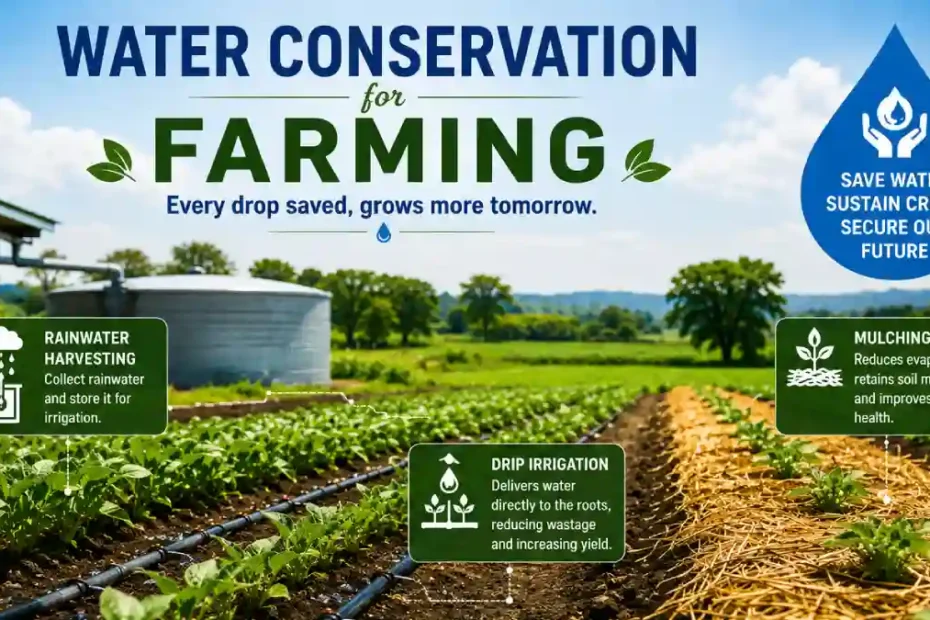
Water is kinda like the lifeblood of global agriculture, or at least it feels that way, especially once everything starts wobbling around a bit. But with climate volatility ramping up, aquifers thinning out, and freshwater disputes between cities and rural communities getting louder, the agricultural sector is basically hit with a hard ultimatum right now: shift how it relates to water, or risk global food insecurity. To build a sustainable and safe agricultural future, we really need to move toward water conservation in farming. Lerts checkout some key steps that will help the farmer build a sustainable process of farming, in this article.
What Is Water Conservation
Water conservation is a practice that helps to store water for later use. It is important to prevent the crisis of groundwater, especially for agriculture or farming. Conservation of natural resources is important to balance the environment and water resources.
What Is Sustainable Farming And Goals
Sustainable farming is a way to protect the environment, improve soil fertility, and expand natural resources. The main aim of this method is to meet society’s food and textile need with out compromising the future generation.
This process is highly demanding due to incredible techniques such as crop rotation and using organic fertilizers to improve soil. It increases the usage of natural resources for better farming and protects the environmental elements to improve the lives of farmers.
Importance Of Water Conservation In Farming
Water is an essential natural element that is needed for all living beings. But it is more important to conserve water for our future, as it is important for our agriculture. We all know that a large part of society depends on farming and agriculture, and a lack of natural water can be a challenge for the agriculture industry as well. Apart from that, it is essential to consider other aspects such as
- Protecting eco system
- Supporting agriculture
- Economic benefits
- Climate resilience
Conservation Methods Of Water In Farming
1. Precision Irrigation
The traditional process of irrigation, like the flood or furrow system are highly inefficient and not environmentally friendly. It loosens up the soil volume in the upper layer and destroys the soil functions. The plants did not get the water to their roots. Therefore, the following modern technology fits best for sustainable farming.
- Drip Irrigation System: The process of dripping helps to distribute water to the roots of the plants. Thus, it helps to pass through the surrounding soil surface and minimize evaporation, and reduces the wastage of using about 30 to 70 % of water.
- Subsurface drip irrigation: By creating the dri lines under the soil surface, water emission can be prevented. This helps the soil to keep the water intact in the roots of the plants and prevents the upper surface from being wet to grow fungus.
- Application of low-energy precision: In large scale of field low prtessured pivot sprinklers are used instead of high-pressure sprinklers. The water pressure is controlled in the low-pressure sprinklers, which help to deposit the water gently in the furrows.
2. Soil Management
Soil in farming plays a vital role as it is the basic base of agriculture. It acts like a sponge to store the water within the center. Holding the moisture for a long period of time helps the plant grow better.
- Conservation Tillage and No-till Farming: This process is highly effective in conserving the soil particles within it. In the traditional process, the spice features and structures get destroyed, accelerating the evaporation. In the no-till farming process, the unused portions of the corm are left in the upper section of the soil, which prevents sun rays from touching the upper ground directly. It provides shade on the upper layer of the soil and lowers the usage of water.
- High mulching: Using the organic elements such as straw, wood chips, compost, animal dung, prepare a cover on the upper layer. As a result, evaporation and growth of weeds are prevented.
- Cover crop cultivation: A better way to protect the soil and its deep moisture is to cultivate cover crops such as rye, clover, or vetch. Their roots are strong enough t o hold the soil tightly and prevent soil erosion during floods or heavy rain. As these crops are decomposed into the soil, they add organic matter to the soil.
3. Smart Technology and Data-Driven Scheduling
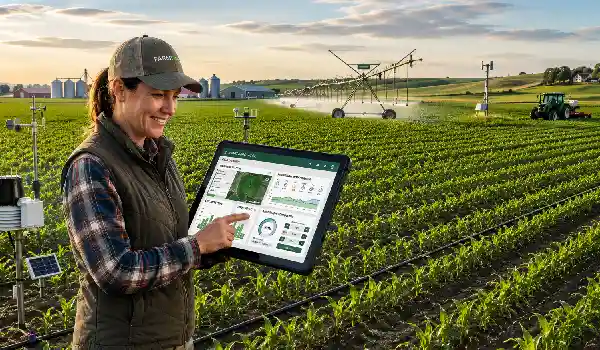
When modern technologies arrive, the traditional technologies are founded defolder. In modern technology, they hold a sensor to understand the need for water when it is needed and prevent overwatering.
- Soil moisture sensor: In modern farming, technologies have advanced. Therefore, they used a watering sensor to monitor the need for water in the soil. Digital sensors track the water content, and farmers can monitor it to prevent the extra water usage.
- Drone and satellite use: Thermal imaging using drones or satellites can map crop water stress over huge landscapes, kind of like it shows where the plants are struggling first. Farmers can then identify the drier pockets and deal with them via targeted repairs for things like localized leaks instead of doing broad, blanket irrigation everywhere, which usually ends up excessive.
4. Strategic Crop Selection and Rotations
For different plant cultivation, they belong to different hydration levels. Justifying the growth of the plants can be a better choice to save water in this era.
- Drought-tolerant plants: Agriculture scientist suggests to cuiltivtes crops like maize, sorghum, and millets as they are drought-tolerant plants. They can have better growth in minimal rainfall and keep the moisture deep in the soil. Shifting to these climate-resilient seeds preserves high yields during dry spells.
- Agroforestry: Mixing trees and shrubs into crop and livestock settings sort of makes microclimates, you know. The deeper roots of trees start pulling up groundwater, and their big canopies help block the crops underneath from harsh drying winds and too much solar radiation.
5. Rainwater Harvesting and Tailwater Recovery
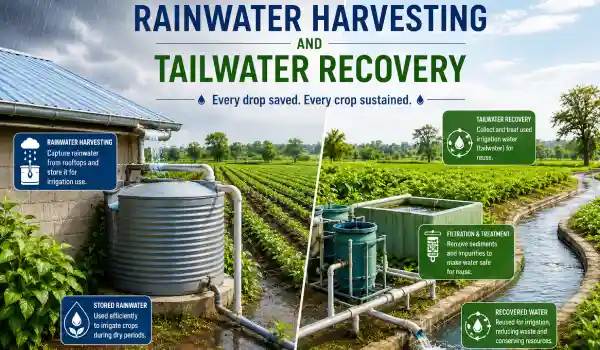
The easiest and most effective way to increase the water availability for farming is to reserve the natural sources of water. It is precious, available, and budget-friendly to invest in high cultivation.
- On farm ponds: preparing the sediment basis in the farm field is the best way to conserve the natural source of water, rain. This collected water is stored and used during peak summer dry spells.
- Tailwater recovery system: These systems snag the unabsorbed irrigation runoff at the low end of a field, then filter out the sediment and pump it right back into the main storage system so it can be cycled again through the fields, over and over a bit.
6. Organic farming
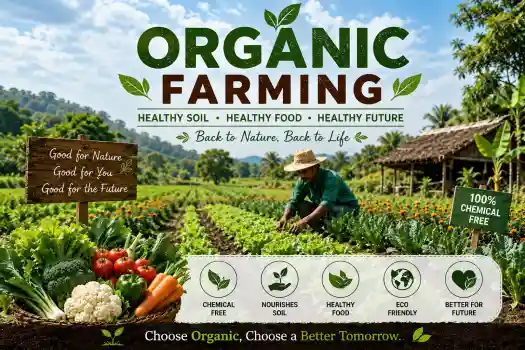
Organic farming is kind of a group of agricultural techniques that sort of emphasise natural methods and everyday materials to boost soil fertility, reduce how much people rely on artificial chemicals, and keep water in a better state, so it stays preserved.
Conclusion
Considering these water conservation methods in farming is a vital decision to save natural water, improve cultivation, and the lives of farmers. To bring these methods into the farming industry may require a huge capital investment, but it can be a long-term return for both the economy and the agriculture industry.
By upgrading your fields into smarter, sustainable ecosystems, agriculture can keep its financial footing and safeguard the food supply for many generations to come. Organic farming is more like a set of agricultural methods that push you toward natural approaches and materials, to build up soil fertility, cut back on reliance on manufactured chemicals, and help preserve water, better than usual.
FAQs
It has become critical for agriculture as agriculture consume rarely 70% of fresh water. That is why, for full support, it is important to save the water for later use.
No, it can not reduce the crop yields.
Drip irrigation is the best way to conserve water for farming or agriculture.
The set of management strategies and farming practices used to protect topsoil from erosion, degradation, and nutrient depletion.
Rainwater is a free source of water. This natural source is abundant, and that is why they chose this.
Pingback: What Is Drip Irrigation? Benefits, Types & Cost (2026)
Pingback: Advantages of Drip Irrigation: 9 Proven Benefits & Costs