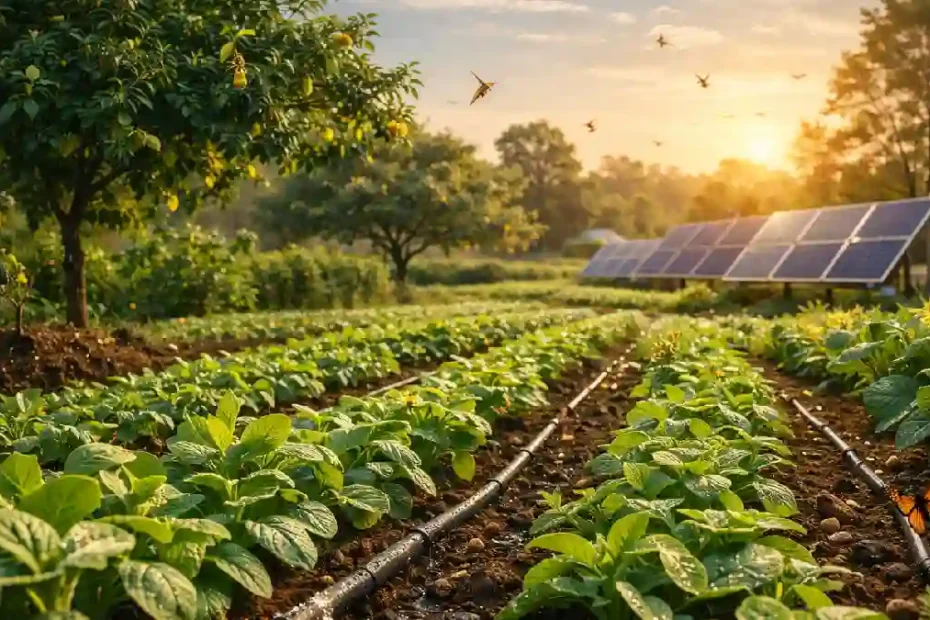
Sustainable agriculture is emerging as an important solution to the food and environmental crises in the world. Traditional farming systems face increasing threats from climate change, soil degradation, and water scarcity, and most nations are moving towards ecologically friendly agriculture systems.
Sustainable farming focuses on producing food while preserving natural resources like soil, water, and biodiversity. Through the use of environment-friendly methods, farmers will be able to get a higher yield without compromising the environment to support the generation yet to come.
This article explores the advantages of sustainable agriculture, its methods, and why it is considered the future of farming.
What is Sustainable Agriculture?
Sustainable Agriculture is a type of farming practice where farmers produce crops without harming the soil fertility and biodiversity of the area. Thus, it ensures that future generations also have enough resources to meet their demand for food.
Sustainable agriculture does not use chemical fertilizers, pesticides, unlike the traditional farming system that requires the heavy use of fertilizers and pesticides.
It aims at developing a balanced agricultural ecosystem that will sustain long term agricultural productivity without harming the environment.
Key Advantages of Sustainable Agriculture
Sustainable agriculture offers many benefits for farmers, consumers, and the environment. Here are some of the key advantages.
- Improves Soil Fertility
Chemical fertilizers (NPK fertilizers) can disrupt the pH balance of the soil, rendering it infertile over time. However, the nitrogen-binding bacteria in the roots of the legume plants can increase the nitrogen quantity of the soil, while animal compost and plant residue increase the quantities of other nutrients naturally.
- Conserves Water Resources
Drip Irrigation and Sprinkler irrigation used in this farming method are known to reduce water wastage by 30%-70%. This is very important in correcting the water cycle and saving farmable water for the future.
- Enhances Biodiversity
Methods like agroforestry and biological pest control contribute to increasing the biodiversity of the surroundings. Large trees offer habitats for wildlife, insects, and birds, increasing biodiversity. In the Biological pest control method, only predators of specific pests are used, which are harmless to pollinators.
- Food Security
With the current population growth rate, the United Nations estimate that we will have 9.7 billion mouths to feed by 2050. Sustainable Farming is one of the ways to meet that huge demand in an eco-friendly way. Since Nitrogen fixing bacteria enhance the level of nitrogen in soil, sustainable agriculture can increase food production.
- Minimizing Environmental Pollution
This method uses minimum chemical fertilizers and pesticides when necessary and relies only on animal composts and eco-friendly pest control methods. As a result, chemical pollution and soil erosion drop significantly in these areas. It also protects biodiversity in these areas.
- Improves Farmers’ Income
Sustainable Farming diversifies crop production. By applying crop rotation and agroforestry, farmers can produce multiple crops throughout the season and have a stable source of income in spite of the fluctuations in demand. The farmers can also cultivate pollinators like bees and produce honey, diversifying the products even more.
- Promoting Energy Efficiency
Sustainable Farming focuses on energy efficiency, also. It uses solar energy for electricity generation, eliminating traditional fossil fuels and the chances of pollution.
Methods Used in Sustainable Agriculture
Sustainable farming systems frequently employ a number of methods.
Crop Rotation
Crop rotation is the practice of cultivating different crops in the same field across different seasons. Instead of planting grains throughout the year, a farmer can plant legumes and vegetables in between them. Farming legumes naturally increases the nitrogen quantity in the soil, while green vegetables break the life cycle of pests.
No-Till Farming
In this method, farmers do not plough the field and leave the plant residue there. This practice increases soil fertility and prevents soil erosion.
Agroforestry
Apart from the tea plantation, which requires big trees, farmers are now planting big, woody trees in regular farming as well. These trees have stronger roots, so they prevent soil erosion and shelter many animals, contributing to increasing the biodiversity of the area. Farmers can sell the fruits of these trees and use the leaves to sustain livestock.
Drip Irrigation
Drip irrigation minimizes the use of water by 30%-70% in farming. Farmers install tubes and pipes in the ground and apply water drop by drop directly to the roots. Israel is the global pioneer of this method. India, the USA, and Australia have also adopted this method in dry regions. This method is great for water conservation and preventing soil erosion.
Challenges of Sustainable Agriculture
Despite its benefits, sustainable agriculture also faces some challenges.
- New technologies have high initial investment.
- Poor awareness of farmers.
- Lack of availability of organic inputs.
- Training and education are required.
However, these barriers are being overcome by government support programs and agricultural innovations.
The Future Potential of Sustainable Agriculture
In order to optimize productivity while reducing environmental impact, Sustainable Agriculture’s future lies in combining cutting-edge technology with environmentally friendly methods. Regenerative agriculture, which restores soil health, precision farming (drones, AI), and bio-input resource centers are some of the major themes. This change lessens dependency on artificial inputs while ensuring food security for an expanding population.
Conclusion
In the age of severe environmental pollution and rapid population growth, Sustainable Farming becomes a must. We not only need to feed more than 8 billion mouths, but also minimize environmental degradation while saving resources for future generations. Sustainable Farming also contributes to saving the biodiversity of the area as well as ensuring a stable income for the farmers.
Frequently Asked Questions
Sustainable Agriculture is a farming method that focuses on environmentally friendly farming as well as maintaining high crop growth. This method involves crop rotation, agroforestry, no-till farming, and drip irrigation.
Sustainable Agriculture reduces or eliminates chemical use and water wastage, thus improving the nutrient quotient in soil and preventing soil erosion. By using this method, farmers can increase crop yield and sustain a decent income as well.
Common methods include crop rotation, organic fertilizers, no-till farming, agroforestry, biological pest control, and drip irrigation.
No. Organic farming focuses mainly on avoiding chemical fertilizers and pesticides, while sustainable agriculture aims to balance productivity, environmental protection, and long-term agricultural sustainability.
Yes. The Government of India promotes sustainable agriculture through schemes such as Paramparagat Krishi Vikas Yojana (PKVY) and Per Drop More Crop, which support organic farming and efficient irrigation systems.